The false consensus effect is a cognitive bias where people overestimate how widely their own beliefs, opinions, and behaviors are shared by others. In consumer research, this leads internal teams to assume their own experiences and preferences reflect the broader market, and it's typically managed through objective research, diverse perspectives, and audience segmentation.

Quick answer: The false consensus effect is a cognitive bias where people overestimate how widely their own beliefs, opinions, and behaviors are shared by others. In Consumer Insights research, it causes teams to design for assumed majorities that don't exist - making objective audience research the most reliable counterforce.
You think your view is the common one. Your team agrees. So you assume most customers probably feel the same way. That assumption is the false consensus effect - and in market research, product design, and business strategy, it's one of the most costly biases to leave unexamined. McKinsey's research on product launch effectiveness found that the root cause of most launch failures is insufficient customer understanding - with teams frequently relying on internal assumptions about what customers want rather than direct evidence from target audiences. The false consensus effect is one of the primary mechanisms driving those assumptions. See: Confirmation Bias in Consumer Research
What is the false consensus effect?
A cognitive bias where people overestimate how widely their own beliefs, opinions, and behaviors are shared by others. Most people assume their views are more common than they actually are. This is especially consequential in Consumer Insights work, where misplaced confidence in internal assumptions routinely shapes product decisions, messaging strategies, and market positioning before any audience evidence is gathered. Understanding consumer psychology helps explain why this bias is so deeply ingrained - people naturally use their own mental models to predict others' behaviour.
Factors that reinforce it
Selective exposure: We associate mainly with people who share our views - reinforcing the perception that those views are common
Cognitive availability: Our own thoughts and experiences are easier to recall, leading us to treat them as more representative
Social comparison: We assume others think similarly to maintain a sense of normalcy
Projection: We project our attitudes onto others as a psychological simplification
McKinsey's State of the Consumer 2025 provides a striking illustration: consumers identify social media as their least trusted source for buying decisions - yet it is also where they interact with friends and family, their most trusted sources. That apparent contradiction is exactly what internal teams miss when operating under false consensus: what colleagues assume about consumer behaviour, based on their own social media experience, rarely reflects how consumers actually make decisions.
How to counter it
Conduct objective research: Surveys, polls, and empirical studies replace personal beliefs with representative evidence. See: Top Survey Tools
Seek diverse perspectives: Engage with people from different backgrounds and demographics actively
Segment your audience: Breaking audiences into segments reveals the diversity assumptions miss. See: Market Segmentation
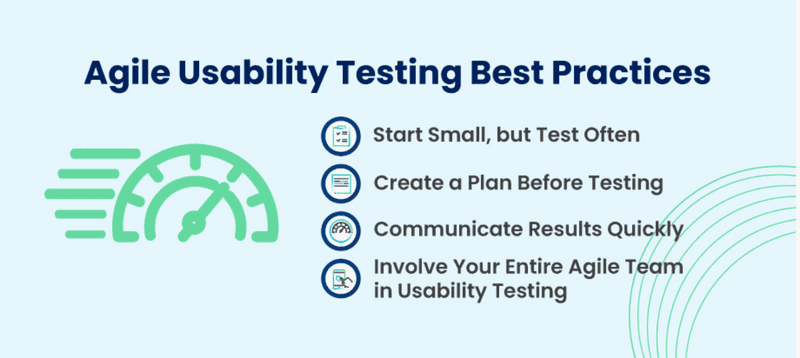
User test your assumptions: Observing real users surfaces gaps between what the team assumed and how people actually behave
Forrester's 2024 Customer Experience Index found that only 3% of companies currently qualify as customer-obsessed - confirming that the vast majority of organisations are still making product and marketing decisions based on internal consensus rather than actual audience evidence. Understanding Selection Bias alongside false consensus is important: both cause research and strategy to systematically misrepresent the audiences they're supposed to serve. For teams looking to replace assumptions with evidence at scale, modern consumer research platforms provide the survey, interview, and behavioral measurement infrastructure needed to build an objective picture of how audiences actually think and behave.
Decode by Entropik helps teams replace false consensus assumptions with real audience evidence - through surveys, AI-moderated interviews, behavioral observation, and emotion AI measurement. Understanding how consumers actually think and feel, not how you assume they do, is the foundation of effective product and marketing decisions.
FAQs
What is the false consensus effect?
A cognitive bias where people overestimate how widely their own beliefs, opinions, and behaviors are shared by others. Most people assume their views are more typical than they actually are.
Why does it matter in market research?
It causes teams to design products and campaigns based on personal preference - assuming their target audience agrees. Without real audience research, it results in misaligned products, ineffective messaging, and missed segments.
What causes the false consensus effect?
Primarily selective exposure - we mostly interact with people who share our views. Cognitive availability bias and motivated reasoning also contribute to the systematic overestimation of how common our views are.
How does research counteract it?
By replacing assumptions with evidence. Surveys, usability testing, segmentation analysis, and cross-cultural research surface the actual diversity in how people think - showing teams where their assumptions don't match reality.
Related Topic: