Retail marketing in 2026 is being shaped by unified commerce across channels, AI-driven personalization, social commerce, and a growing emphasis on sustainability and authentic customer engagement. Brands are moving from simply being present across channels to making those touchpoints work together, using consumer insights to anticipate needs rather than react to them.
The New Reality of Retail Marketing
Retail marketing is no longer just about promotions, discounts, or store displays. In 2026, it is about understanding customers deeply, engaging them across channels, and delivering personalized experiences at scale.
Consumers today expect more. They want:
Seamless online and offline experiences
Personalized recommendations
Fast and convenient shopping journeys
Meaningful brand interactions
At the same time, competition has intensified. Brands are not only competing on price or product but on experience, relevance, and emotional connection.
This shift makes retail marketing more complex, but also more powerful for brands that get it right.
Key Retail Marketing Trends in 2026
Retail is evolving rapidly, driven by technology, data, and changing consumer behavior. Here are the most important trends shaping retail marketing today.
Personalization at Scale
Consumers expect brands to understand their preferences. Retailers are using data to deliver:
Personalized offers
Product recommendations
Targeted campaigns
Generic marketing no longer works. Relevance is key to engagement and conversion.
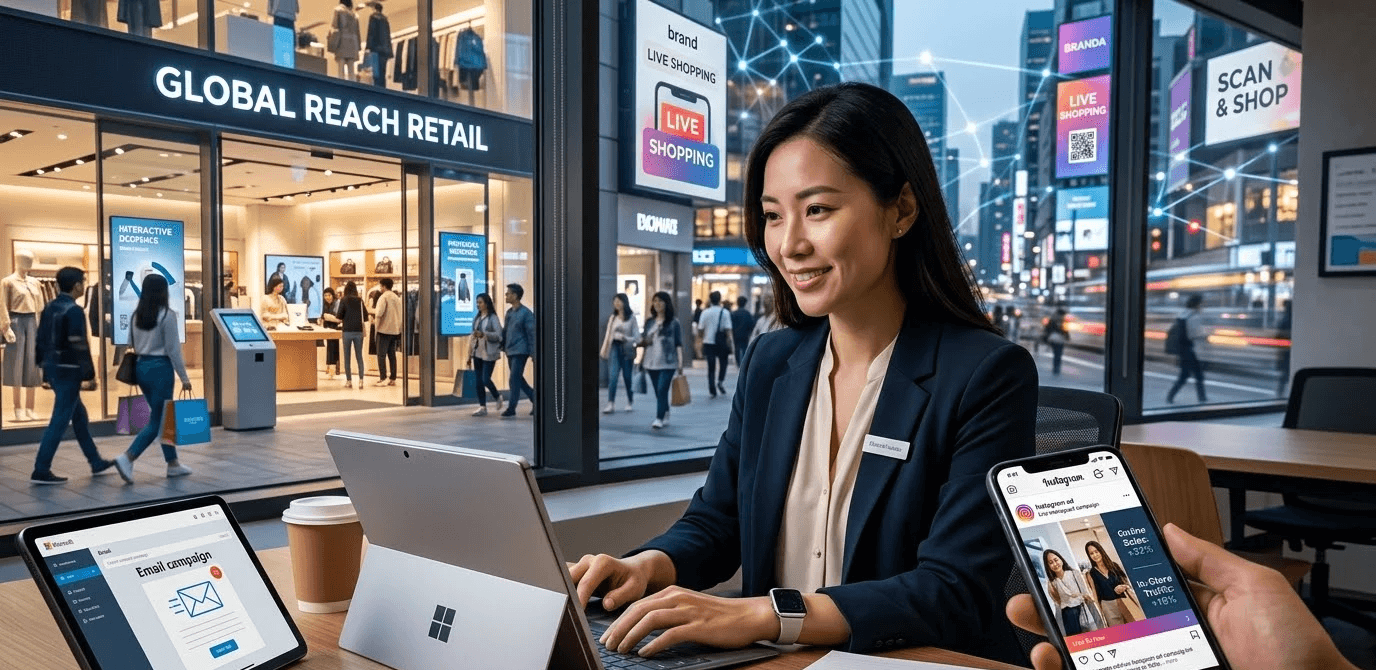
Omnichannel and Hybrid Commerce
Customers move seamlessly between online and offline channels.
Retailers are integrating:
In-store experiences
E-commerce platforms
Mobile apps
Social commerce
Features like click and collect, virtual try-ons, and unified promotions are becoming standard.
Experience-Led Retail
Retail is becoming experiential.
Brands are focusing on:
In-store experiences
Interactive displays
Sensory marketing
Community events
The goal is to make shopping memorable, not just transactional.
Social Commerce and Influencer-Led Discovery
Social media is no longer just for awareness. It is a direct sales channel.
Consumers are discovering and buying products through:
Instagram and TikTok
Influencer recommendations
Live shopping experiences
Data-Driven Marketing Decisions
Retailers are increasingly relying on data to guide decisions.
This includes:
Customer segmentation
Behavioral insights
Campaign performance tracking
Data helps brands optimize marketing spend and improve ROI.
Sustainability as a Brand Driver
Consumers are more conscious about sustainability.
Retail brands are focusing on:
Eco-friendly products
Transparent sourcing
Responsible packaging
Sustainability is no longer optional. It is a competitive advantage.
The Biggest Pain Points in Retail Marketing
Despite these advancements, many retail brands struggle to execute effective strategies.
1. Lack of Deep Consumer Understanding
Many retailers rely on surface-level data such as sales or demographics.
The problem:
They know what customers buy, but not why they buy.
Impact:
Ineffective targeting
Low campaign performance
Missed opportunities
How Decode Helps:
Decode enables brands to understand consumer behavior, emotions, and motivations. This helps retailers go beyond basic data and uncover what truly drives purchase decisions.
2. Poor Personalization and Irrelevant Messaging
Retailers often send generic offers that do not resonate with customers.
The problem:
Lack of insight into individual preferences and context.
Impact:
Low engagement
Reduced conversion rates
Customer fatigue
How Decode Helps:
Decode helps brands analyze customer responses to content, creatives, and messaging, enabling more personalized and relevant campaigns.
3. Fragmented Omnichannel Experience
Many brands struggle to create a seamless experience across channels.
The problem:
Disconnected online and offline journeys.
Impact:
Customer frustration
Drop-offs in the journey
Inconsistent brand perception
How Decode Helps:
Decode provides insights into customer journeys and engagement across touchpoints, helping brands identify friction points and optimize experiences.
4. Creative Ineffectiveness
Retail campaigns often fail because creatives do not capture attention.
The problem:
Brands do not test creatives before launch.
Impact:
Low ad performance
Wasted marketing spend
Weak brand recall
How Decode Helps:
Decode enables creative testing and attention analysis, helping brands identify which visuals, messages, and formats drive engagement before going live.
5. In-Store Experience Gaps
Physical retail still plays a crucial role, but many stores fail to engage customers effectively.
The problem:
Lack of insight into how customers interact within stores.
Impact:
Poor product visibility
Missed cross-sell opportunities
Lower conversion rates
How Decode Helps:
With eye gaze tracking and behavioral insights, Decode helps retailers understand what captures attention in-store and optimize layouts, displays, and product placement.
6. Inability to Measure True Marketing Impact
Many retailers still rely on traditional metrics like impressions and sales.
The problem:
Limited understanding of attention, emotion, and engagement.
Impact:
Incomplete performance insights
Poor decision making
How Decode Helps:
Decode measures attention, emotional response, and engagement, giving brands a deeper understanding of what actually works.
How Retail Brands Can Improve Their Marketing Strategy
To succeed in 2026, retail brands need to rethink their approach.
Build a Customer-First Strategy
Start with understanding your customers:
Who they are
What they need
Why they make decisions
Consumer insights should drive every marketing decision.
Invest in Personalization
Use data to deliver:
Relevant offers
Tailored communication
Context-aware experiences
Personalization improves engagement and loyalty.
Create Seamless Omnichannel Experiences
Ensure consistency across:
Online and offline channels
Messaging and branding
Promotions and pricing
Customers should experience one unified brand.
Focus on Experience, Not Just Transactions
Make retail engaging through:
Interactive experiences
In-store events
Digital enhancements
Experience drives differentiation.
Test, Learn, and Optimize Continuously
Retail marketing is not static.
Brands should:
Test creatives and campaigns
Analyze performance
Optimize based on insights
Continuous improvement is key to staying competitive.
The Role of Consumer Insights in Retail Marketing
At the core of every successful retail strategy is consumer understanding.
Without insights, marketing becomes guesswork.
With insights, brands can:
Predict customer needs
Improve experiences
Increase conversions
Build stronger relationships
Consumer insights transform retail marketing from reactive to proactive.
How Entropik Helps Retail Brands Win
In a complex retail landscape, brands need more than data. They need actionable consumer insights.
Entropik’s Decode platform helps retail brands:
Understand consumer behavior and emotional responses
Test campaigns, creatives, and experiences before launch
Measure attention and engagement across touchpoints
Optimize customer journeys and in-store experiences
Build data-driven retail marketing strategies
By combining behavioral science and AI, Decode enables brands to make smarter marketing decisions and create experiences that truly resonate.
Final Thoughts
Retail marketing in 2026 is defined by one key principle:
The brands that understand their customers best will win.
It is no longer enough to push products or run campaigns. Success depends on:
Personalization
Experience
Data-driven decisions
Continuous optimization
Retail is becoming more dynamic, more competitive, and more customer-centric.
And the brands that invest in understanding their consumers will not just keep up.
They will lead.
Frequently asked questions
1. What are the top retail marketing trends for 2026?
Key trends include AI-driven personalization, omnichannel experiences, emotion-informed marketing, and greater use of predictive analytics to anticipate shopper behavior.
2. What challenges are retailers facing in 2026?
Retailers face challenges like rising customer acquisition costs, fragmented channels, and the need to balance personalization with data privacy expectations.
3. How can retailers improve customer engagement in 2026?
Combining behavioral data, emotion AI, and real-time personalization helps retailers create more relevant, engaging experiences across touchpoints.
4. How is AI reshaping retail marketing in 2026?
AI is enabling deeper personalization, predictive demand forecasting, and real-time customer insights that help retailers respond faster to shifting behavior.
5. What role does omnichannel strategy play in 2026 retail marketing?
Omnichannel strategy ensures a seamless experience across online, mobile, and in-store touchpoints, which is increasingly expected by today's retail shoppers.
Related Topic: