This platform is described as the world's first fully self-serve, interactive shopper research offering, letting brands simulate real-world shelf and pack testing to understand shopper behavior without relying on traditional, resource-heavy in-store methods. Being interactive and self-serve means brands can launch, iterate, and analyze shopper studies independently, capturing the subconscious purchase drivers that static surveys often miss.

If Online Shopping wasn't enough of a challenge for the Retail sector, Covid-19 has given customers even more reasons to shop online. The steady rise in Online Shopping is recorded up to 44% growth in 2020, and the sudden impact of Covid-19 has left retailers with no option but to innovate.
Experts predict in-stores to transform into immersive, customer experience centers to stand out from online stores. According to a 2021 Forbes study, 90% of its respondents said that they would likely return to a business where they had a positive in-store experience.
Importance of Shopper Research Platform
Shopper Research is the first step towards in-store innovation, finding out what works and doesn't work to persuade the new-age customer with in-store experiences. And in the wake of Covid-19, if there's one realization that consumer insights teams have had, it is that traditional methods like surveys, interviews, and CLTs are not feasible or scalable options for shopper research anymore. These in-person methods have always been resource-intensive and time-consuming, limiting the scope of shopper research to influence retail innovation.
Secondly, surveys or interviews completely rely on the stated responses of the tester panel. However, 95% of the purchase decisions are made by the subconscious mind. Customers are usually unable to articulate these subconscious preferences in controlled environments like surveys/interviews, thus failing to describe the real intent/triggers that led them to purchase something.
To solve these two problems, Entropik Tech has launched "Interactive Virtual Shopper Research" on its Emotion Analytics platform, Affect Lab. Augmenting its existing shopper research solution, the platform now enables researchers to simulate an interactive and virtual shopping environment to test packaging, planograms, store layouts, and point of sale materials (PoSM).
Leveraging Interactive Virtual Shopper Research
1. 360 Retail Walkthrough
Researchers can simulate a complete virtual shopper environment by uploading store walkthrough videos or a link to a 2D/3D interactive store walkthrough.
The insights generated from these tests can be used to pick the most persuasive in-store configurations and identify high/low engagement zones inside a store.
The retail walkthroughs can also be used to measure the noticeability and persuasiveness of Point of Sale Materials (PoSM).

2. 2D Pack/3D Pack Testing
If the study involves testing packaging designs, researchers can upload their 2D packaging designs and compare them with other variants or competitor packages.
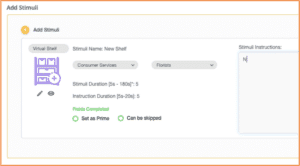
Multiple products can be added with suitable descriptions and price points.
The insights generated from these tests can be used to identify the package designs that are more noticeable and persuasive in comparison with competitor packages.
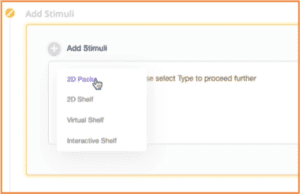
3. Planogram/Shelf Testing
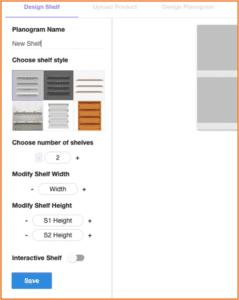
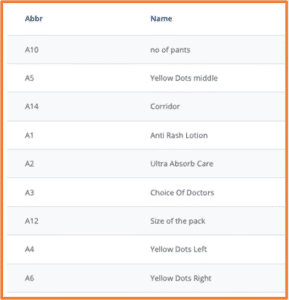
If the study involves testing shelf placement and layout, researchers can design their own virtual planogram or upload a pre-designed one into the platform.
Customizations can be made in terms of shelf rows/height/width and package size while creating a new shelf design from scratch.
The insights generated from these tests can be used to pick the most efficient/noticeable shelf layouts and best placement strategies for packages to be picked up.
4. Interactive Retail Testing
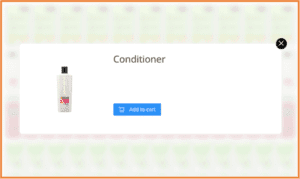
If the study involves shopping tasks, the virtual shelves can be further made interactive by including 'Add to Cart' feature.
Instructions to these virtual shopping tasks can be provided in the beginning of the test.
The insights generated from this test can be a good measure of the purchase intent that is driven by the overall packaging and shelf placement strategy.
Added Benefit of Affect Lab Features
Powered with Eye Tracking, the platform provides actionable insights on where the shopper is looking and for how long; visualized as heatmaps, AOIs, and gaze plots.
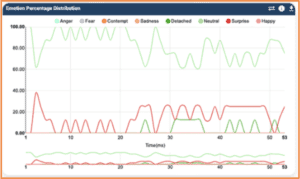
Also powered by Facial Coding, the platform uses facial expressions to measure emotional responses during the shopping experience, highlighting high and low points.
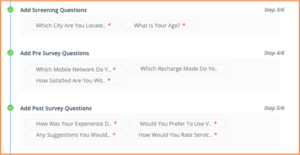
In addition to these Emotion AI-powered quantitative tests, researchers can add screening, pre-survey, and post-survey questions to obtain qualitative insights.
All of the above-mentioned tests can be performed and benchmarked across 110 countries using Affect Lab's online panel of 50mn+ respondents or the researcher's own panel.
Conclusion
Entropik Tech's 'Interactive Virtual Shopper Research' solves two major challenges that consumer insights teams are facing today:
Scalability: Making Shopper Research more feasible and scalable by making it completely online. This means shopper research can be performed at the fingertips of both the researcher and participant, using a laptop, phone, or tablet.
Accuracy: Making Shopper Research more accurate by measuring subconscious shopper behavior. This means researchers can now pinpoint the design elements, shelf placements, and emotional triggers that influenced a purchase.
Frequently asked questions
1. What happened with McDonald's AI Christmas ad?
The ad generated public backlash, illustrating the risks of using AI-generated creative content without sufficient testing of audience emotional reception before launch.
2. Why is testing important for AI-generated creative content?
AI-generated content can miss subtle emotional or cultural cues, making pre-launch testing critical to catch reactions that could lead to backlash once live.
3. How could Emotion AI testing have helped prevent this kind of backlash?
Testing creative with Emotion AI before launch could have flagged negative emotional reactions or discomfort among test audiences, allowing the brand to revise the ad before public release.
4. What lesson does this backlash offer other brands using AI in advertising?
It highlights that AI-generated creative still requires the same, if not more, rigorous emotional and audience testing as traditionally produced content before launch.
5. Should Emotion AI testing be a standard part of the creative production workflow?
Given cases like this, incorporating Emotion AI testing as a standard checkpoint before launching new creative especially AI-generated content can help brands avoid costly public missteps.
Related Topic: