Ad blindness is the tendency of users to consciously or subconsciously ignore advertisements, especially those in predictable locations like sidebars, banners, or pre-roll videos. It's a coping mechanism the brain develops in response to information overload, and it's a growing problem for marketers as ad-blocking adoption and oversaturation continue to rise.
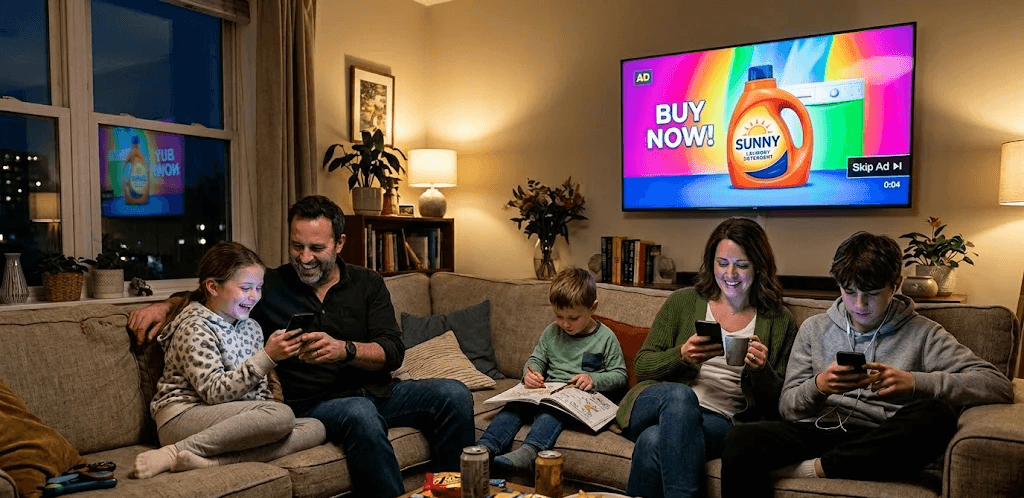
The Reality: Most Ads Are Seen, But Not Felt
Consumers today are not short of exposure to ads. In fact, they are overwhelmed by them.
Recent data shows that 93% of consumers skip or ignore ads, with more than half actively skipping whenever possible. At the same time, only a small percentage are willing to pay to avoid ads entirely. This reveals an important truth:
The problem is not ad exposure. It is lack of engagement.
People are seeing ads. They are just not connecting with them.
In today’s attention economy, brands are not competing for impressions. They are competing for attention, emotion, and memory.
What Is Ad Blindness?
Ad blindness refers to the tendency of users to consciously or subconsciously ignore advertisements.
Over time, consumers have developed a natural filtering mechanism that allows them to tune out anything that feels irrelevant, repetitive, or overly promotional.
There are two common forms:
Banner Ad Blindness
Users automatically ignore display ads, especially those placed in predictable locations like sidebars or headers.
Advertising Fatigue
Consumers disengage from repeated exposure to similar ads across platforms, leading to reduced attention and negative brand perception.
In simple terms, people are not avoiding ads. They are avoiding uninteresting experiences.
Why Consumers Ignore Ads
Understanding why ads fail is the first step toward improving performance.
Repetitive Advertising Creates Fatigue
Repetition without variation leads to disengagement.
Studies show that:
66% of consumers ignore repetitive ads on the same platform
88% pay less attention to repeated ads
76% develop a negative perception of brands showing the same creatives
When audiences see the same message repeatedly, it stops being effective and starts becoming noise.
Lack of Creative Differentiation
While most marketers agree that creativity drives performance, many struggle to define what “good creative” actually means.
As a result, ads often:
Look similar to competitors
Follow predictable formats
Fail to stand out visually
Without a strong creative edge, ads fail to capture attention in the first few seconds — which is critical in today’s fast-scrolling environments.
Cognitive Overload and Short Attention Spans
Consumers are exposed to thousands of ads daily, leading to cognitive overload.
The human brain filters information aggressively, focusing only on what feels relevant or emotionally engaging.
Most ads fail to pass this filter because they:
Do not provide immediate value
Interrupt the user experience
Lack emotional relevance
This leads to passive attention, where users may see the ad but do not engage with it.
Irrelevant Messaging
Consumers do not dislike ads. They dislike irrelevant ads.
Generic messaging that does not align with user interests, behavior, or context is quickly ignored.
Personalization and relevance are no longer optional. They are essential for capturing attention.
Poor Timing and Placement
Even well-designed ads can fail if they appear at the wrong time or in the wrong place.
Interruptive formats such as pop-ups or poorly timed video ads disrupt user experience, leading to immediate disengagement.
Why Attention Is the New Advertising Metric
Traditional metrics like impressions and reach no longer reflect true performance.
An ad being “viewed” does not mean it was noticed, understood, or remembered.
Viewability vs Attention
Viewability means the ad had the chance to be seen
Attention means the user actually noticed and engaged
Passive vs Active Attention
Passive attention occurs when users briefly glance at an ad without processing it
Active attention happens when users pause, engage, or interact
Brands that drive active attention are more likely to:
Improve brand recall
Increase purchase intent
Build stronger emotional connections
Attention is not just a metric. It is a predictor of impact.
What Actually Grabs Consumer Attention Today
Despite ad fatigue, consumers still engage with content that feels relevant, entertaining, or meaningful.
Emotion-Driven Storytelling
Consumers respond to ads that evoke emotion. Whether it is humor, inspiration, or relatability, emotional storytelling creates stronger memory and engagement.
Visual Disruption
Unexpected visuals, bold design, and pattern-breaking creatives help ads stand out in crowded feeds.
Consumers are more likely to notice ads that feel different from everything else around them.
Interactive and Engaging Formats
Interactive ads such as polls, quizzes, and clickable formats encourage active participation.
Data shows that 78% of consumers are more likely to engage with ads that are interactive and entertaining.
Personalization and Relevance
Tailored messaging based on user behavior, preferences, and context increases the likelihood of engagement.
Consumers are more receptive to ads that feel relevant to their needs.
Speed and Clarity
In mobile-first environments, ads have only a few seconds to capture attention.
Effective ads:
Communicate value instantly
Use strong visuals
Deliver a clear message quickly
How Brands Can Overcome Ad Blindness
To succeed in today’s advertising landscape, brands must shift from interruption to engagement.
Focus on Creative Testing
Instead of relying on assumptions, brands should test multiple creative variations to identify what resonates with their audience.
Build a Creative Feedback Loop
High-performing teams continuously test, learn, and optimize campaigns based on real user responses.
This creates a cycle where each campaign improves the next.
Align Creative, Media, and Insights
Breaking silos between teams ensures that creative decisions are informed by data and optimized for performance.
Prioritize Consumer Experience
Ads should feel like part of the experience, not a disruption.
When ads provide value, entertainment, or relevance, consumers are more likely to engage.
How Decode Helps Brands Improve Ad Effectiveness
Understanding why ads are ignored requires more than traditional metrics.
Decode by Entropik helps brands measure how consumers actually respond to advertising through behavioral and emotional insights.
With Decode, brands can:
Measure visual attention using eye gaze tracking
Analyze emotional engagement with Emotion AI
Identify which elements capture attention in the first few seconds
Test multiple creative variations before launch
Optimize campaigns based on real consumer responses
By combining consumer insights, attention analytics, and creative testing, Decode enables brands to move beyond guesswork and build ads that truly connect.
Final Thoughts
Consumers are not ignoring ads because they dislike advertising. They are ignoring ads that fail to capture attention, deliver value, or create emotional connection.
In a world of constant content and limited attention, the brands that succeed are those that:
Understand their audience deeply
Invest in creativity and storytelling
Use data to refine and optimize campaigns
Advertising is no longer about being seen.
It is about being remembered.
And that starts with understanding what truly captures attention.
Frequently asked questions
1. What is ad blindness?
Ad blindness, or banner blindness, is the tendency of consumers to unconsciously ignore ad-like content, especially in familiar formats or placements.
2. Why do consumers develop ad blindness?
Repeated exposure to similar ad formats trains viewers to subconsciously filter them out, especially when ads are predictable, repetitive, or placed in expected locations.
3. How can brands fix ad blindness in their campaigns?
Using novel formats, native-style placements, strong emotional hooks, and testing creative for attention capture can help ads break through habitual filtering.
4. Does ad blindness affect all ad formats equally?
No, more novel or native-feeling formats tend to experience less ad blindness than traditional, predictable placements like standard banner ads.
5. How can testing help identify ad blindness risk before launch?
Attention tracking and eye-tracking studies can reveal whether an ad design is likely to be visually skipped over before it goes live, allowing early adjustments.
Related Topic: