Message testing is the process of checking whether a piece of creative is communicating its intended idea clearly, focusing specifically on whether the audience's interpretation matches what the brand meant to say. It becomes especially valuable when a brand is introducing new positioning, launching creative packed with claims or comparisons, or trying to ensure the single most important takeaway isn't getting lost among competing messages.
Why Message Testing Matters Before Launch
Brands usually know what they want a piece of creative to say. The problem is that audiences do not always take away the same message.
An ad can look polished, emotionally engaging, and visually strong, yet still communicate the wrong thing. The intended value proposition may not come through. A secondary cue may stand out more than the main point. The creative may be remembered, but the message is not.
That gap between intended communication and audience interpretation is exactly why message testing matters.
Before a campaign goes live, brands need to know whether the creative is actually landing the way they expect. Message testing helps teams validate whether the ad is clear, what people think it is saying, what stands out first, and where confusion or mismatch may be happening.
What Message Testing Is and Why It Matters
Message testing is the process of checking whether a piece of creative is communicating the intended idea clearly to the audience.
At a basic level, it helps answer questions like:
What do people think this ad is saying?
Is the core message coming through clearly?
Are audiences taking away the intended value or something else?
Which part of the message is most noticeable?
What feels unclear, confusing, or contradictory?
That makes message testing research different from broader ad evaluation. General ad testing may look at overall response, appeal, or performance potential. Message testing is more focused. It looks specifically at communication: whether the message is landing, how it is being interpreted, and whether what the audience receives matches what the brand intended to say.
This matters because creative can fail even when it looks good. If the wrong message comes through, the audience may misunderstand the value, miss the point entirely, or remember something that does not support the brand goal.
Why Creative Is Often Interpreted Differently Than Intended
Creative does not exist in the brand team’s head. It exists in the audience’s context.
That is why creative messaging often lands differently than planned. A brand may believe the ad is clear, but viewers bring their own expectations, habits, attention patterns, and assumptions to what they see.
A few common problems cause this gap.
Too many competing cues
When visuals, copy, offer, branding, and call to action all compete for attention, people may notice the wrong thing first. The intended message gets diluted.
Unclear value proposition
A creative may say several things without making one clear promise. The result is weak message clarity, even if the ad looks polished.
Strong aesthetics, weak takeaway
Sometimes the creative is memorable, but the audience cannot explain what it was really trying to communicate. This is one of the most common problems in advertising message testing.
Different audience interpretation
What feels obvious to the internal team may not feel obvious to real viewers. Audiences may interpret language, imagery, or tone differently than expected.
This is why brands cannot rely only on internal review. They need evidence of what the message is actually doing in the minds of real people.
What Message Testing Actually Helps Brands Learn
A strong message testing process helps brands move beyond assumptions.
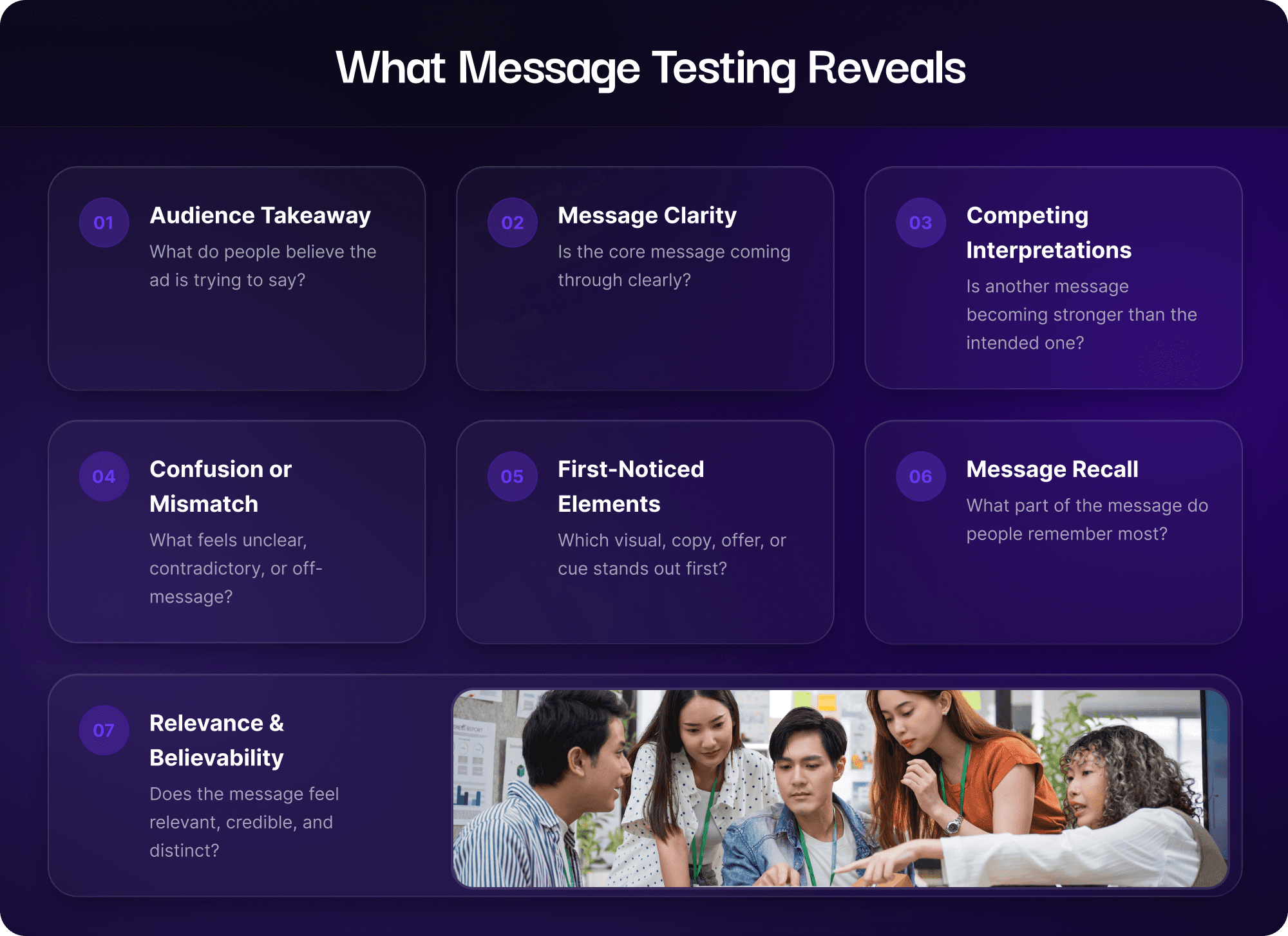
It can show:
what people believe the ad is trying to say
whether the core message is coming through clearly
whether the intended message is stronger than competing interpretations
what creates confusion or mismatch
what gets noticed first
what part of the message is remembered most
whether the message feels relevant, believable, or distinct
This is useful because brands do not just need creative that attracts attention. They need creative that communicates the right idea.
For example, a team may believe an ad is emphasizing product ease, while viewers actually come away thinking the main message is price. A campaign meant to feel premium may be interpreted as vague. A brand may want to highlight innovation, but viewers mostly notice the offer. These gaps are exactly what marketing message testing is meant to uncover.
When Message Testing Is Especially Useful
Message testing is not necessary for every piece of creative. But it becomes especially useful when communication precision matters.
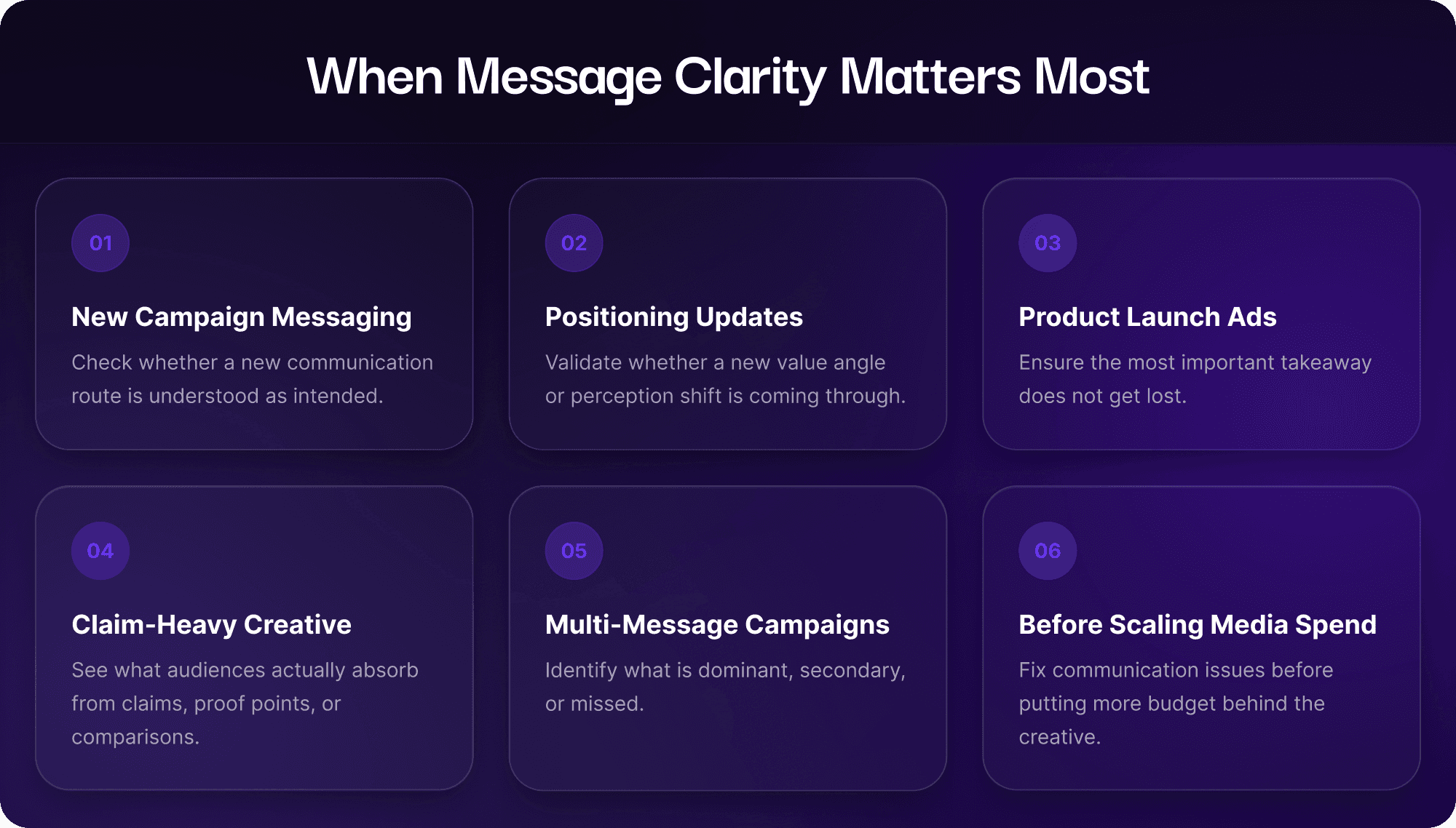
New campaign messaging
If a brand is introducing a new communication route, it is worth checking whether the audience understands it the way the team expects.
Positioning updates
When a brand is trying to shift perception or emphasize a new value angle, brand messaging testing can help validate whether that shift is actually coming through.
Product launch ads
Launch creative often carries a lot of information. Message testing helps ensure the most important takeaway is not getting lost.
Claim-heavy creative
The more an ad relies on claims, comparisons, or proof points, the more important it is to check what people really absorb.
Multi-message campaigns
If a creative tries to communicate several things at once, message testing can help identify what is dominant, what is secondary, and what is getting missed.
Creative before scaling media spend
Before a team puts more budget behind an ad, it helps to know whether the message is landing as intended. Fixing communication issues early is usually easier than correcting them after scale.
How Brands Approach Message Testing
Good message testing research is usually less about asking whether people like an ad and more about understanding what they take away from it.
A useful approach often includes a few principles.
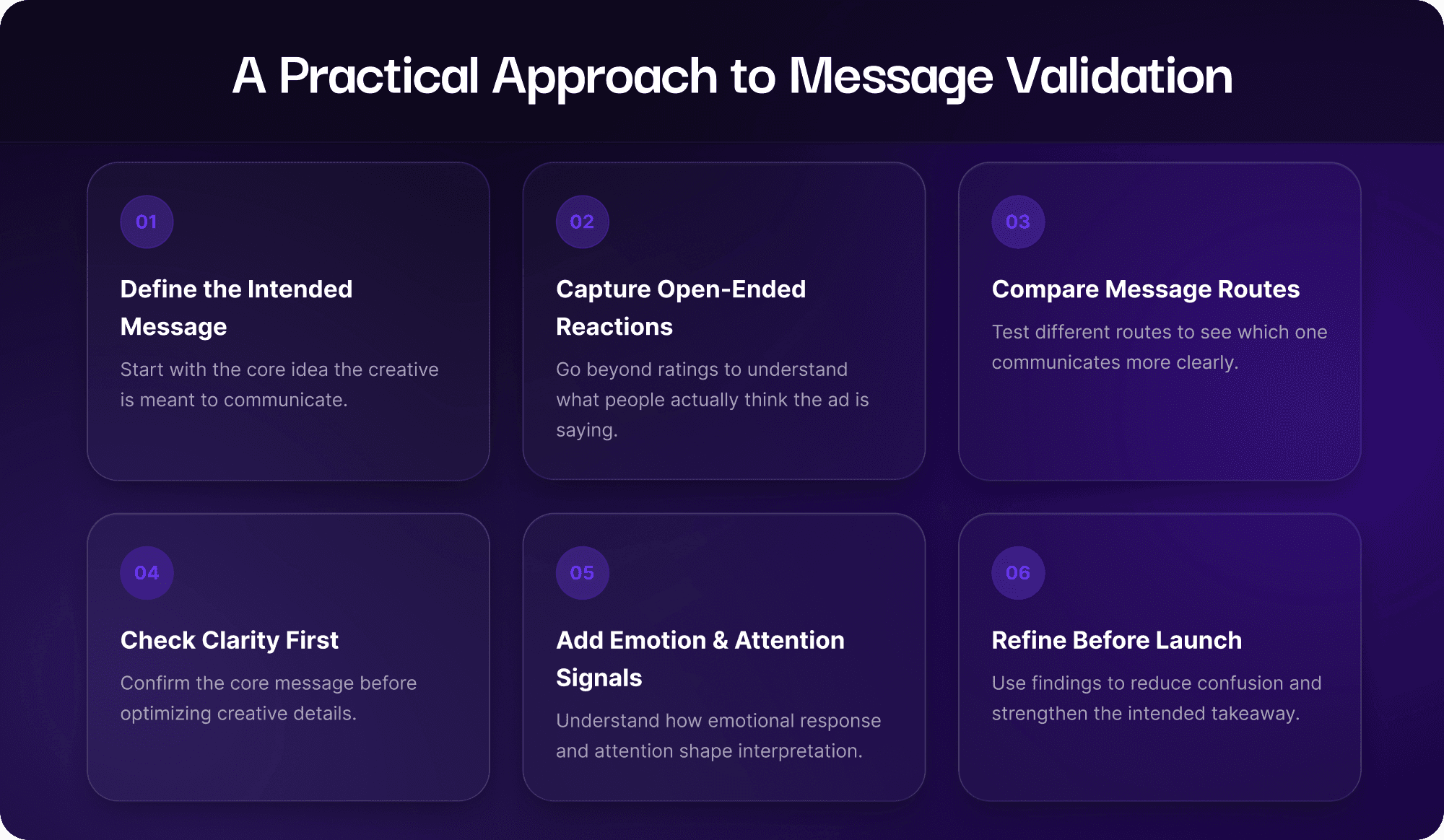
Test intended versus received message
The brand usually begins with a clear intended message. The audience response is then compared against that. This helps reveal whether the creative is landing as planned.
Use open-ended reactions, not only ratings
If people only rate clarity on a scale, teams may miss what they are actually thinking. Open-ended responses help reveal creative interpretation more directly.
Compare different message routes
Sometimes the problem is not whether the ad is working, but whether one message route is clearer than another. Testing multiple routes can make that easier to spot.
Look for clarity before optimization
Before optimizing creative elements, it helps to confirm that the core communication is clear. If the message itself is weak, execution changes alone may not solve the problem.
Consider emotion and attention alongside interpretation
People do not just process ads rationally. Emotional reaction and attention patterns can shape what is understood, remembered, or ignored. This makes message testing stronger when it looks at more than declared feedback alone.
What Message Testing Does Not Solve on Its Own
Message testing is useful, but it does not solve everything.
It does not replace:
strong brand strategy
clear audience understanding
good creative craft
broader ad performance measurement
a full view of message effectiveness over time
A message can test clearly and still fail in-market if the audience is wrong, the placement is weak, or the execution does not hold attention long enough. On the other hand, a creative may generate attention but still communicate the wrong takeaway.
That is why message testing should be treated as one important part of pre-launch validation, not the only decision input.
How Decode by Entropik Helps
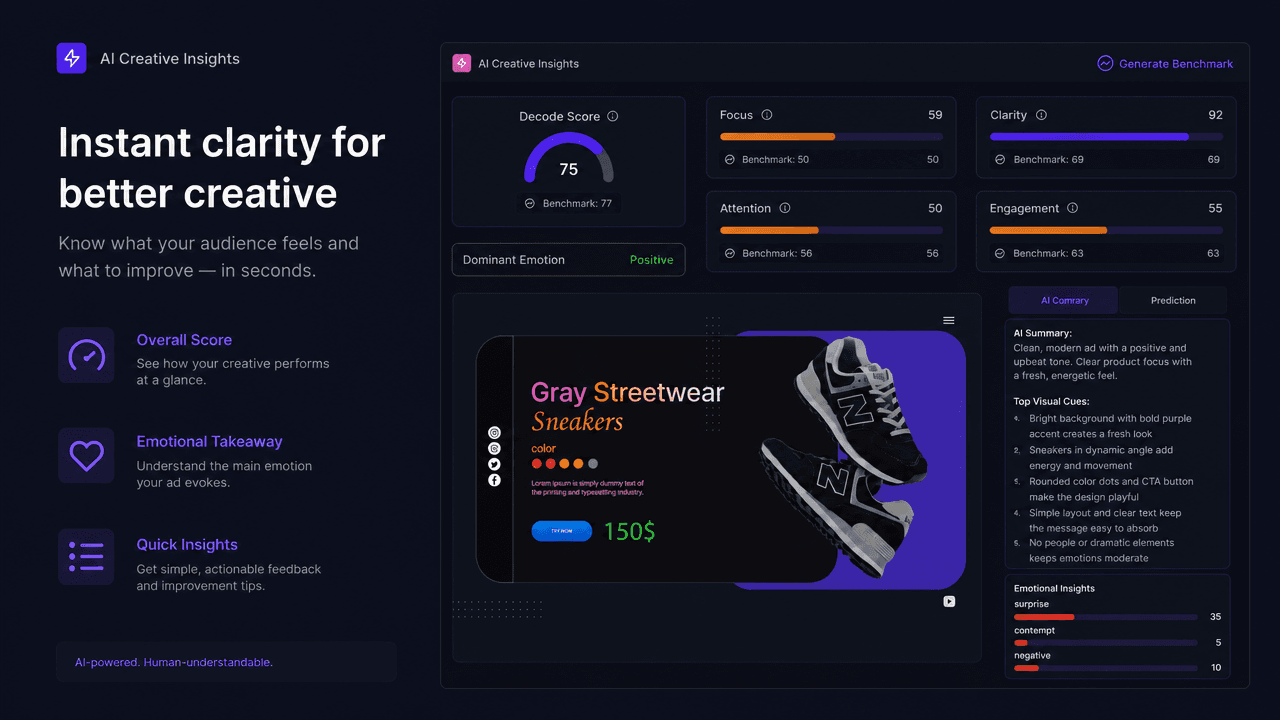
For teams trying to understand whether their creative is really communicating the intended message, Decode by Entropik can help make that process clearer before launch.
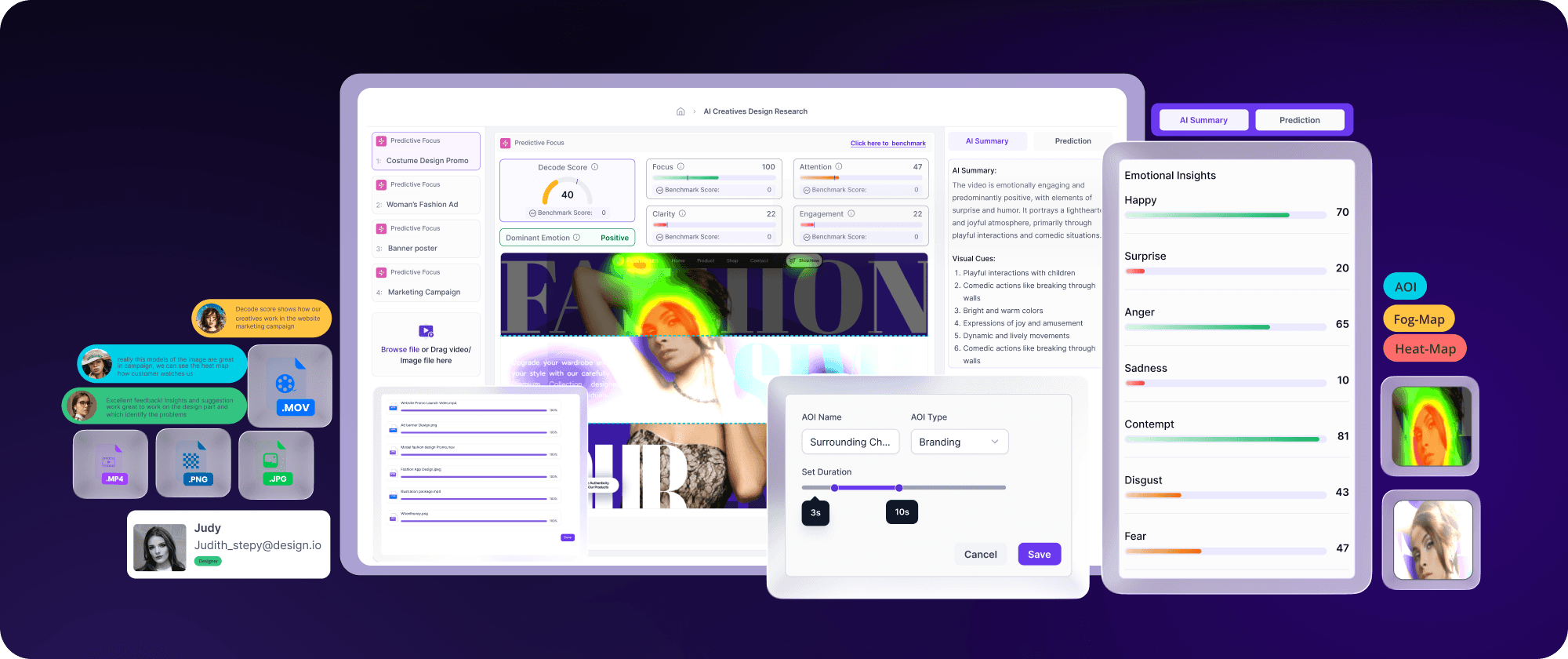
With Decode AI Creative Insights, teams can:
evaluate whether the intended message is actually landing
identify what is driving confusion or mismatch
understand what audiences notice first
connect attention and emotional signals to message interpretation
compare creative routes to see which message comes through more clearly
turn audience reactions into faster creative decisions
That makes Decode useful for teams that want to improve message clarity before campaigns go live, especially when the risk of miscommunication is high.
Final Thoughts
A piece of creative can look strong and still communicate the wrong thing.
That is why message testing matters. It helps brands validate whether the audience is taking away what the creative was actually meant to say. It reveals where communication is clear, where confusion is happening, and what needs refinement before launch.
For teams investing in campaigns, launches, or positioning shifts, that kind of early validation can make a real difference. It helps reduce guesswork, improve message clarity, and strengthen the chances that the right idea is what audiences actually remember.
Frequently asked questions
1. What is message testing?
Message testing evaluates whether an ad or piece of creative content communicates its intended message clearly and resonates with the target audience.
2. Why is message testing important before a campaign launch?
It ensures the core message lands as intended, avoiding wasted media spend on creative that confuses or fails to resonate with audiences.
3. What methods are used for message testing?
Common methods include surveys asking participants to recall the main message, emotion AI analysis, and comparative testing of multiple message variations.
4. How is message testing different from creative testing overall?
Message testing focuses specifically on whether the communicated message is clear and resonant, while broader creative testing also evaluates attention, emotion, and overall ad performance.
5. What signs indicate a message isn't communicating clearly?
Signs include low message recall in testing, participants misinterpreting the intended meaning, or a mismatch between the message and audience emotional reaction.
Related Topic: