Prototype testing lets product managers validate usability, design, and concepts with real users before committing engineering resources to build the final product. Catching issues at the prototype stage is far cheaper and faster to fix than after launch, making it one of the most cost-effective ways to reduce the risk of a product missing user needs.
Every successful product begins with an idea. But between idea and launch lies a critical validation phase that determines whether users will adopt the product or abandon it.
That phase is prototype testing.
Prototype testing is one of the most important usability research methods in modern product development. It allows teams to evaluate design concepts, validate user flows, and uncover friction before investing in full-scale engineering.
In this guide, we explore what prototype testing is, why it matters, how it works, and how it fits into today’s UX research ecosystem.
What Is Prototype Testing?
Prototype testing is a usability testing method where real users interact with an early version of a product to evaluate its structure, flow, and usability.
A prototype may include:
Low fidelity wireframes
Clickable design mockups
Interactive Figma or Adobe XD prototypes
Simulated product environments
The purpose is not to test visual polish. It is to test clarity, navigation, task completion, and overall user experience before development resources are committed.
Prototype testing enables teams to validate assumptions early and reduce product risk.
Why Prototype Testing Matters
Building without validation increases the likelihood of usability failures. When issues are discovered after development, redesign costs rise significantly.
Prototype testing helps organizations:
Identify usability issues before engineering investment
Improve task success rates and user flow clarity
Reduce cognitive friction in navigation
Validate feature discoverability
Align product, design, and engineering teams early
Shorten iteration cycles
By gathering evidence at the design stage, teams avoid expensive corrections later.
In competitive digital environments, early usability validation is a strategic advantage.
The Prototype Testing Process
Prototype testing follows a structured research workflow.
1. Define the Research Objective
Start by identifying what needs validation. This could include onboarding clarity, checkout usability, pricing comprehension, or feature accessibility.
A clearly defined objective ensures focused and measurable outcomes.
2. Build an Interactive Prototype
Designers create an interactive version of the product using tools such as Figma, Sketch, or Adobe XD. The prototype should simulate realistic user interactions while remaining flexible for iteration.
3. Recruit Target Users
Participants should reflect the intended audience. Recruiting users who match the product’s real user base ensures relevant feedback.
4. Conduct the Test
Participants complete realistic tasks while researchers observe behavior. Sessions can be moderated or unmoderated, remote or in-person.
During testing, researchers capture:
Task completion rates
Navigation patterns
Hesitation points
Misclicks
Verbal feedback
Emotional reactions
5. Analyze Findings
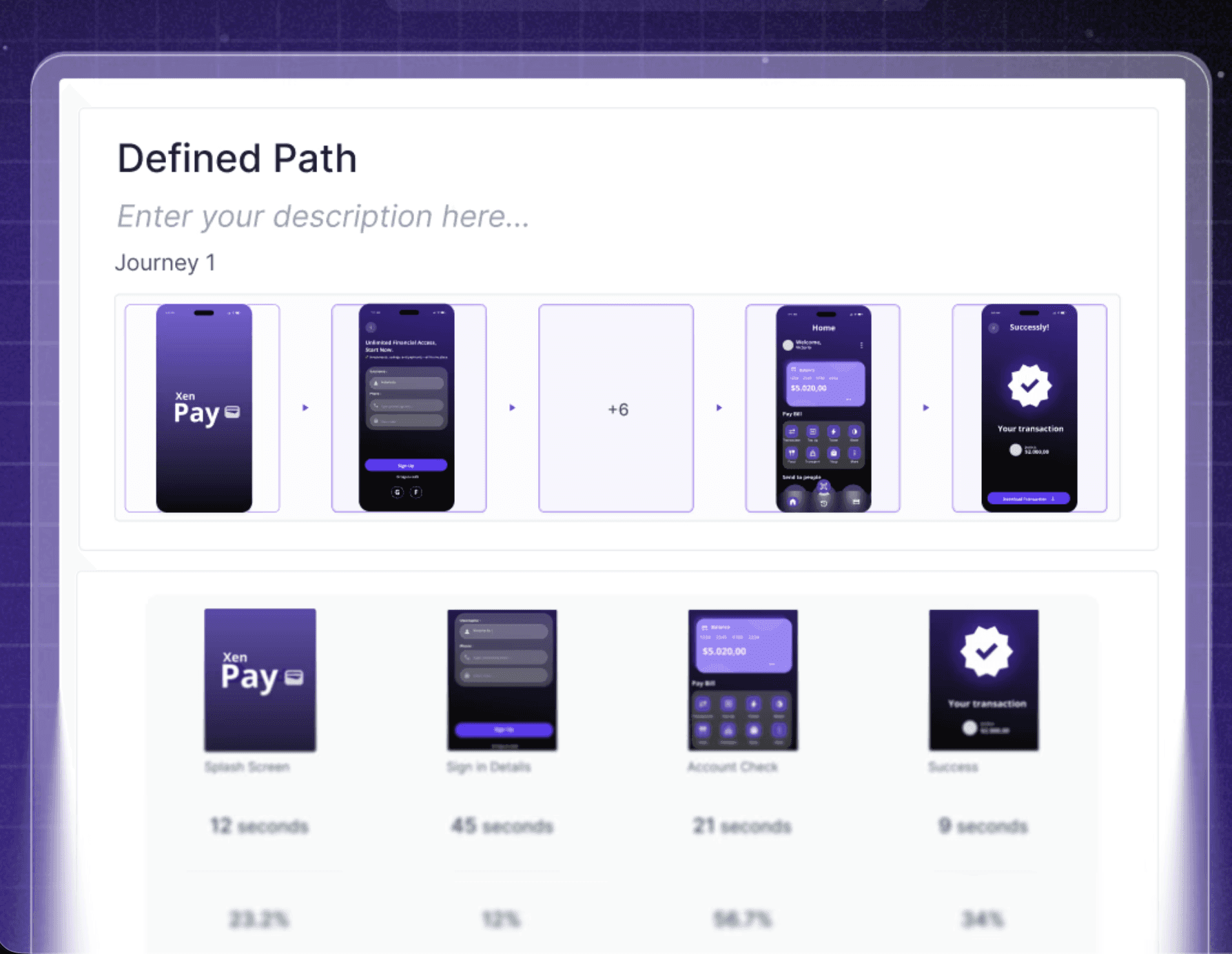
After the sessions, teams synthesize both quantitative usability metrics and qualitative insights to refine the design.
The process often repeats in multiple cycles, improving the prototype incrementally.
Types of Prototype Testing
Different formats support different research goals.
Moderated Prototype Testing
A researcher guides the session, asks follow-up questions, and probes deeper into user behavior. This approach is ideal for exploratory UX research.
Unmoderated Prototype Testing
Participants complete tasks independently through remote testing platforms. This allows larger sample sizes and scalable usability data collection.
Remote Prototype Testing
Users interact with the prototype from their own environment, which often reflects more natural usage behavior.
Comparative Testing
Two or more prototype variations are tested to determine which design performs better across usability metrics.
Each method serves specific research needs depending on time, scale, and depth required.
What Prototype Testing Reveals
Prototype testing surfaces usability challenges that internal teams often overlook.
It can uncover:
Confusing labels or navigation structures
Hidden features that users fail to discover
Unexpected user pathways
Inefficient task flows
Drop-off points during critical actions
Emotional frustration or hesitation
Designers often assume users will behave logically. Real users frequently behave differently.
Prototype testing bridges that gap between expectation and reality.
Prototype Testing vs Usability Testing
Prototype testing is a subset of usability testing.
Usability testing refers to evaluating how easily users can interact with a product at any stage of development. Prototype testing specifically occurs during the early design phase before full product development.
By conducting usability testing at the prototype stage, teams can fix design issues before code is written.
Best Practices for Effective Prototype Testing
To ensure meaningful insights:
Recruit participants that reflect your real user base
Use realistic, scenario-driven tasks
Focus on observing behavior before asking questions
Combine quantitative usability metrics with qualitative feedback
Test critical user journeys rather than isolated screens
Iterate quickly and test again
Consistency and iteration are key to maximizing the value of prototype testing.
Modern Tools for Prototype Testing
Today’s UX research platforms allow teams to conduct remote prototype testing at scale. These tools support:
Uploading interactive prototypes
Running moderated and unmoderated usability studies
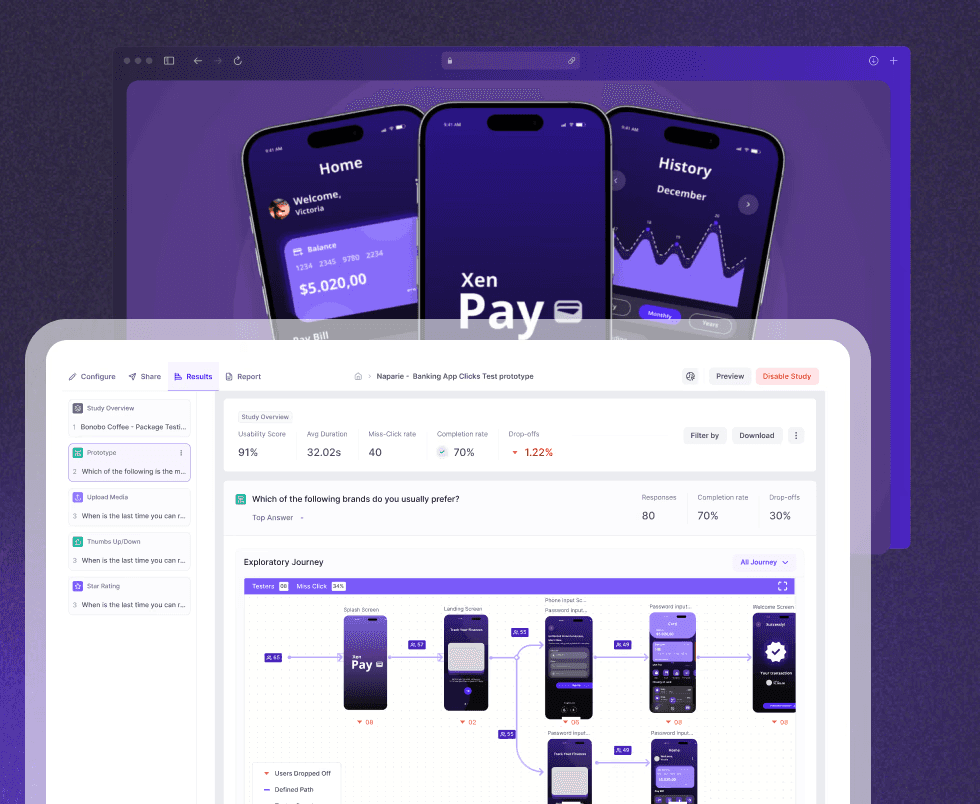
Tracking click paths and task success
Recording user sessions
Automatically generating usability reports
Digital research tools enable faster insight cycles and scalable user feedback.
How Entropik Supports Prototype Testing
Traditional prototype testing focuses on usability metrics such as task completion and navigation behavior. However, understanding user emotion during interactions adds another dimension to insight.
Entropik’s Decode platform, available at https://www.entropik.io, supports prototype testing within a broader behavioral and emotional intelligence framework.
By layering emotion analytics and attention tracking onto prototype interactions, teams can gain insight into:
Emotional engagement during task completion
Moments of hesitation or frustration
Attention patterns across design elements
Behavioral signals that influence decision making
This approach enriches prototype testing by combining usability performance with emotional context.
For teams seeking a deeper understanding of user experience, integrating behavioral intelligence into prototype validation provides additional clarity.
Conclusion
Prototype testing is a foundational UX research method that reduces risk, improves product usability, and accelerates iteration cycles.
By validating early designs with real users, teams gain evidence-based insight that informs better product decisions.
In a digital landscape where user expectations continue to rise, early validation through prototype testing is not optional. It is essential.
Organizations that embed prototype testing into their development lifecycle build products that are clearer, more intuitive, and more aligned with real user needs.
Frequently asked questions
1. Why is prototype testing valuable for product managers?
It allows product managers to validate ideas and catch usability issues before committing significant engineering resources, reducing costly late-stage changes.
2. At what stage should product managers introduce prototype testing?
Prototype testing should be introduced as early as possible, ideally starting with low-fidelity prototypes during initial concept and design exploration.
3. How does prototype testing reduce product development risk?
By surfacing usability issues and validating user needs early, prototype testing reduces the risk of building features that don't resonate with or work for users.
4. What should product managers look for during prototype testing sessions?
Product managers should focus on task completion, points of confusion or hesitation, and whether the prototype's core value proposition resonates with test participants.
5. How can prototype testing findings influence a product roadmap?
Findings can validate or challenge planned features, helping product managers prioritize roadmap items based on real user feedback rather than assumptions alone.
Related Topic: