A user persona template is most useful during product planning, to define a target audience for a new feature, and during user research activities like interviews, where it serves as a structured framework for organizing demographic, behavioral, and pain-point data. It's also used during user testing to recruit participants who closely match target personas, ensuring feedback stays relevant and actionable.

Crafting user-centric products begins with understanding your audience. Enter user persona templates, the essential tool for gaining deep insights into your users' needs, behaviors, and preferences. Let's explore how you can create these personas.
Why should you create user personas through UX research?
User-centered design: User personas offer deep insights into the target audience's needs, preferences, and behaviors, guiding the creation of tailored products that enhance user satisfaction.
Focused decision-making: User personas serve as a reference for aligning efforts across teams, ensuring cohesive and effective design solutions throughout the product development process.
Targeted marketing: User personas enable marketers to tailor messaging and campaigns to specific user segments, increasing the relevance and impact of marketing efforts.
Risk reduction: User personas lower the risk of developing products that don't meet user needs, reducing the likelihood of costly redesigns or product failures.
Improved collaboration: User personas foster cross-functional collaboration by providing a shared understanding of the target audience, facilitating more effective teamwork across departments.
When should you use a user persona template?
A UX template is typically used during the early stages of product development or when conducting user research. It can be particularly helpful in the following scenarios:
Product planning: Use a user persona template to define and understand the target audience for a new product or feature. This helps in aligning the team's efforts and ensuring that the product meets the needs of its intended users.
User research: During user research activities such as interviews or surveys, a user persona template can serve as a structured framework for organizing and synthesizing the collected information about users' demographics, behaviors, goals, and pain points.
Design and development: When designing and developing a product or feature, referencing customer personas templates helps keep the user's needs at the forefront of decision-making. It ensures that design choices are informed by user insights and focused on delivering value to the target audience.
User testing: User persona templates can also be used during user testing sessions to recruit participants who closely match the characteristics of the target personas. This ensures that feedback received during testing is relevant and actionable for improving the product.
How can you create a user persona template?
One of the biggest advantages of Qatalyst is that while there are ready-made templates, you can also create and save your own templates for future use. Let's look at how you can do this:
Log into Qatalyst you will be taken to the dashboard.

From the dashboard, pick "Study Templates."
Pick the "Start from scratch" option.

You can now rename this user persona template and start adding the blocks you need.
For a user persona template, we recommend adding a combination of the Multiple Choice Question blocks and the Short Answer blocks to get the responses you need. This is just a recommendation you can customize it any way you want!
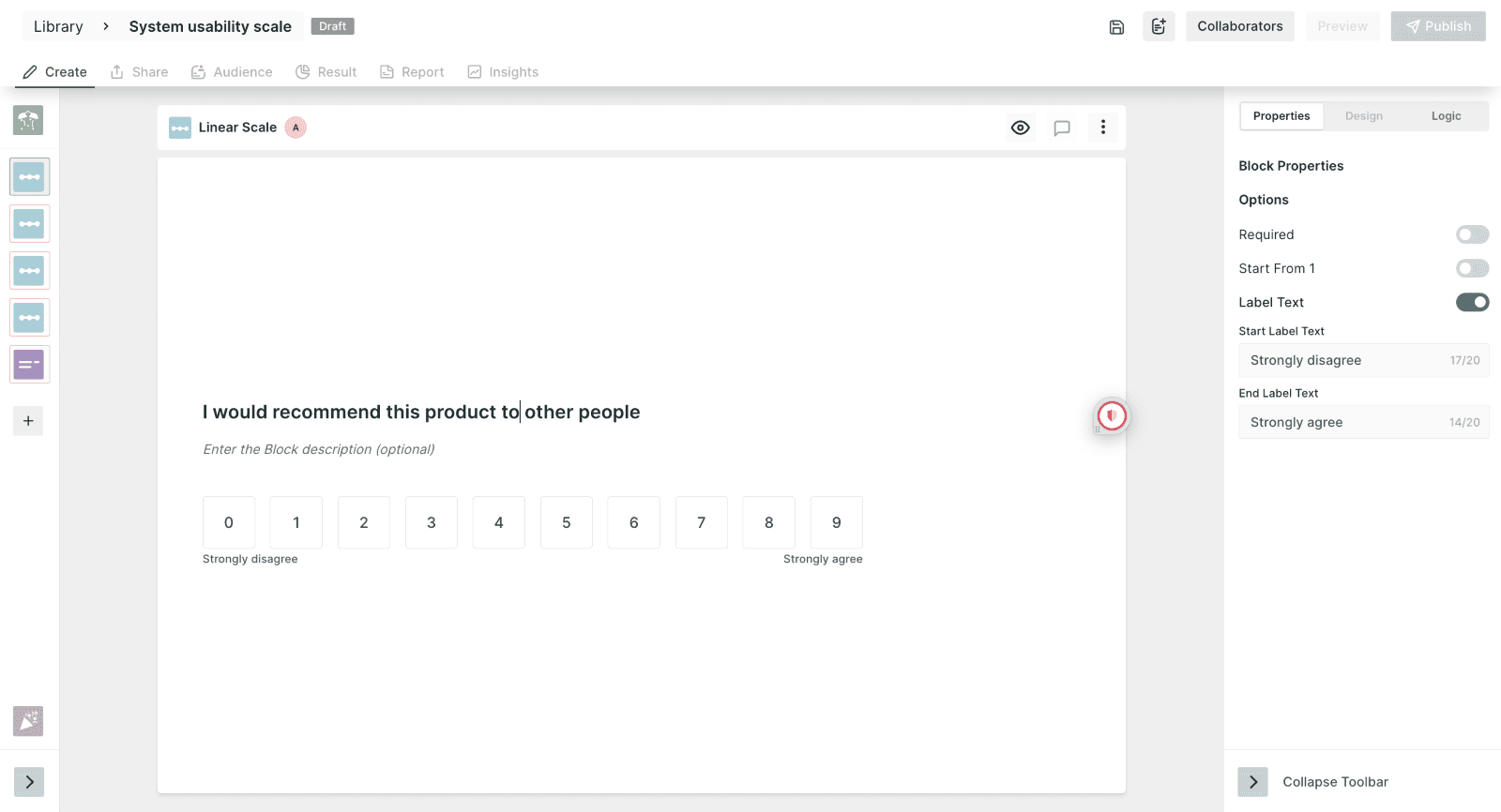
Save this template for future use by clicking on the icon right next to the "Collaborators" button.

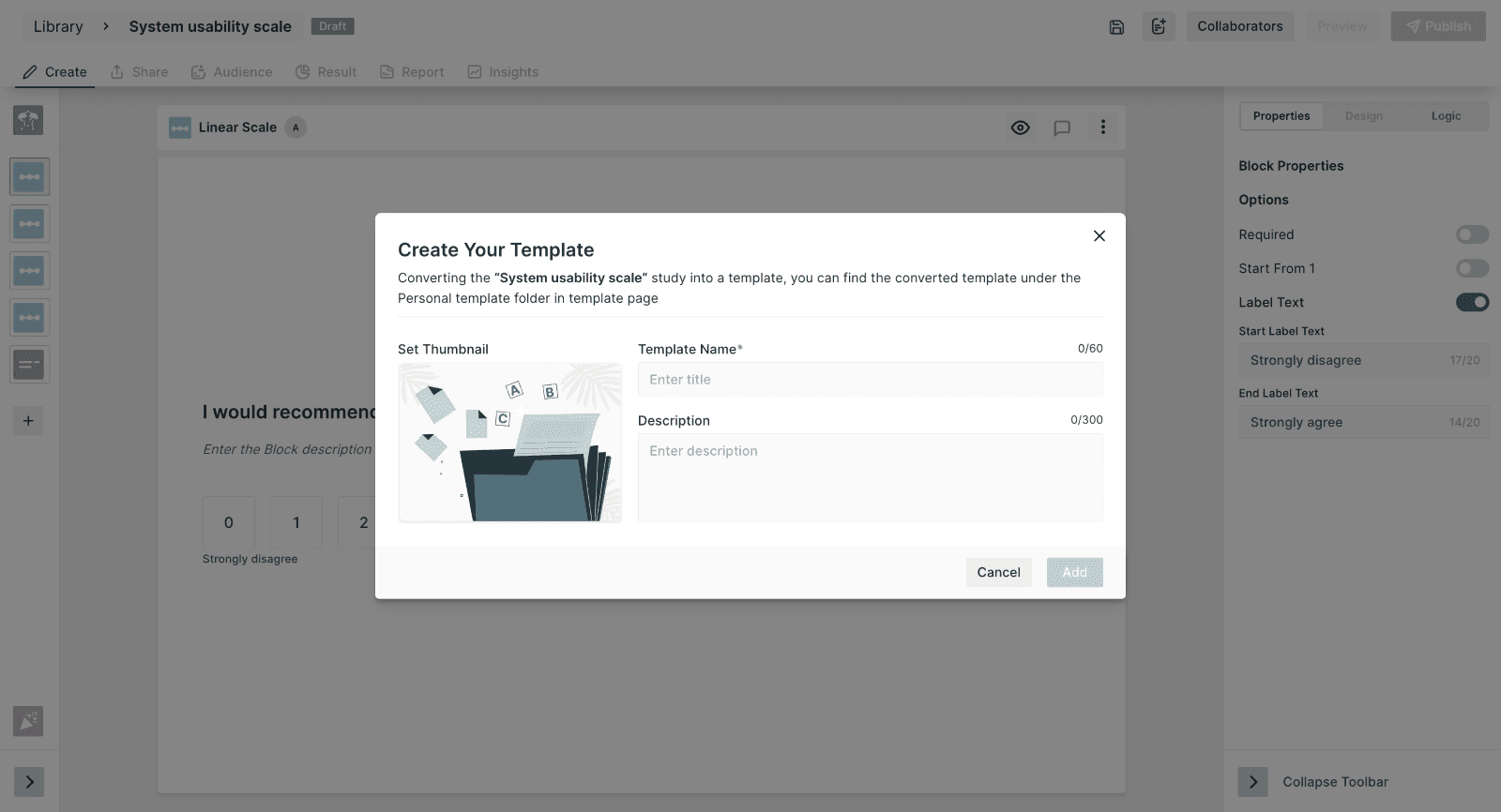
After you're finished setting up the test, just publish and share it with your respondents!
{{cta-trial}}
Frequently asked questions
1. What is a user persona?
A user persona is a fictional, research-based representation of a key user segment, summarizing their goals, behaviors, and pain points to guide design and research decisions.
2. What should a user persona template include?
A good template includes the persona's goals, behaviors, pain points, demographic context, and a memorable name or visual to help teams reference it easily.
3. How many personas should a product typically have?
Most products benefit from 3-5 well-defined personas representing key user segments; too many personas can dilute focus and become impractical to design for.
4. How are user personas created from research data?
Personas are typically built by synthesizing patterns from interviews, surveys, and behavioral data into representative composite profiles of key user segments.
5. How often should user personas be updated?
Personas should be revisited periodically, especially after significant shifts in the user base or product direction, to ensure they remain accurate and relevant.
Related Topic: