Creative fatigue is the decline in ad performance when an audience sees the same creative too many times, dropping engagement and conversions even as targeting and budget stay the same. Early warning signs include falling CTR alongside rising frequency, meaning the same people see the ad repeatedly instead of new audiences, signaling it's time to refresh the creative.
Why Creative Fatigue Matters More Than Teams Often Realize
A creative can perform well at first and still lose impact over time.
What starts as a strong ad can gradually become less effective as the same audience sees it repeatedly. Engagement weakens, response rates fall, and performance starts slipping even if the media plan, audience, or budget has not changed much. By the time teams react, spend has often already been wasted.
That is what makes creative fatigue such an important issue to catch early. It is not just about a creative getting old. It is about a creative losing its ability to capture attention, communicate clearly, or drive action at the level it once did.
For marketers, the goal is not only to recognize fatigue after performance drops. It is to identify the early signs, understand what is weakening, and decide what to change next.
What Creative Fatigue Is and Why It Matters
Creative fatigue happens when a piece of creative loses effectiveness after repeated exposure.
At the start of a campaign, a visual, message, or video may feel fresh and noticeable. Over time, the same audience may stop paying attention in the same way. The ad no longer stands out, the message feels familiar, and response starts weakening.
This is closely related to ad fatigue, a term many marketers use when performance declines because audiences have seen the ad too often. In practice, the two are often used interchangeably. But creative fatigue keeps the focus on what is happening to the creative itself: its ability to hold attention, stay engaging, and continue driving response.
This matters because fatigue in advertising is not always obvious at first. A campaign may still look healthy on the surface while the creative is already starting to lose impact. If teams wait too long, the decline becomes more expensive to fix.
Why Creative Fatigue Happens
There is rarely just one cause. Creative fatigue usually happens because several performance pressures build at once.
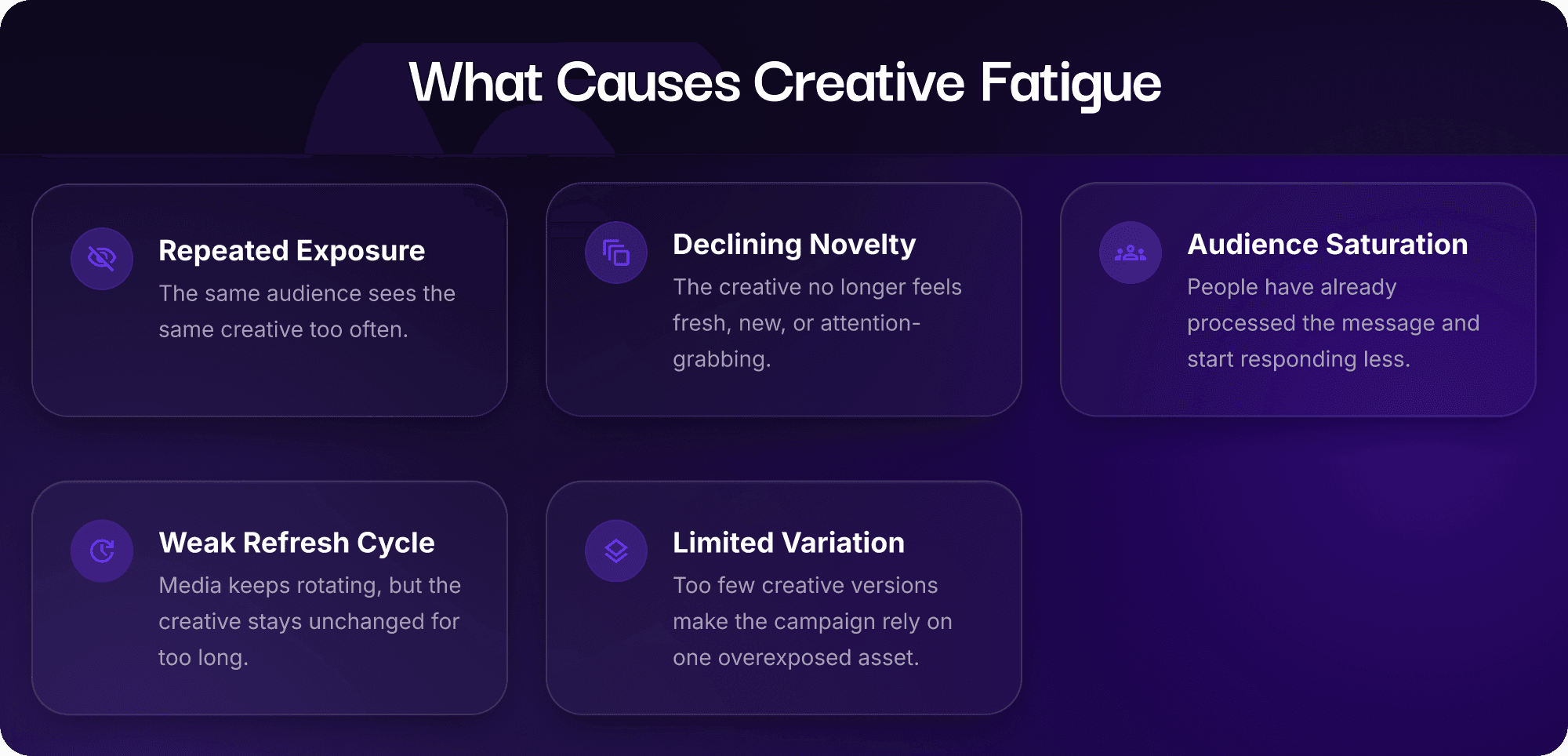
Repeated exposure
The most common reason is frequency. The more often the same audience sees the same creative, the less likely it is to feel new or interesting.
Declining novelty
Even a strong ad can lose its edge once the surprise or freshness wears off. What felt attention-grabbing at first may become easy to ignore later.
Audience saturation
If the same creative keeps reaching the same people, response rates can weaken simply because the audience has already processed the message and moved on.
Weak refresh cycle
Some teams rotate media more often than they rotate creative. When messaging, visuals, or hooks stay unchanged for too long, creative fatigue advertising becomes more likely.
Limited variation
If a campaign relies on too few creative versions, there is less room to sustain attention or learn which angles stay strong longer.
All of this affects creative effectiveness. A creative that once worked can stop performing not because the strategy was wrong, but because the audience has seen too much of the same execution.
How to Spot Creative Fatigue Early
The biggest mistake is waiting until results drop sharply. The better approach is to look for earlier signs of weakening performance.
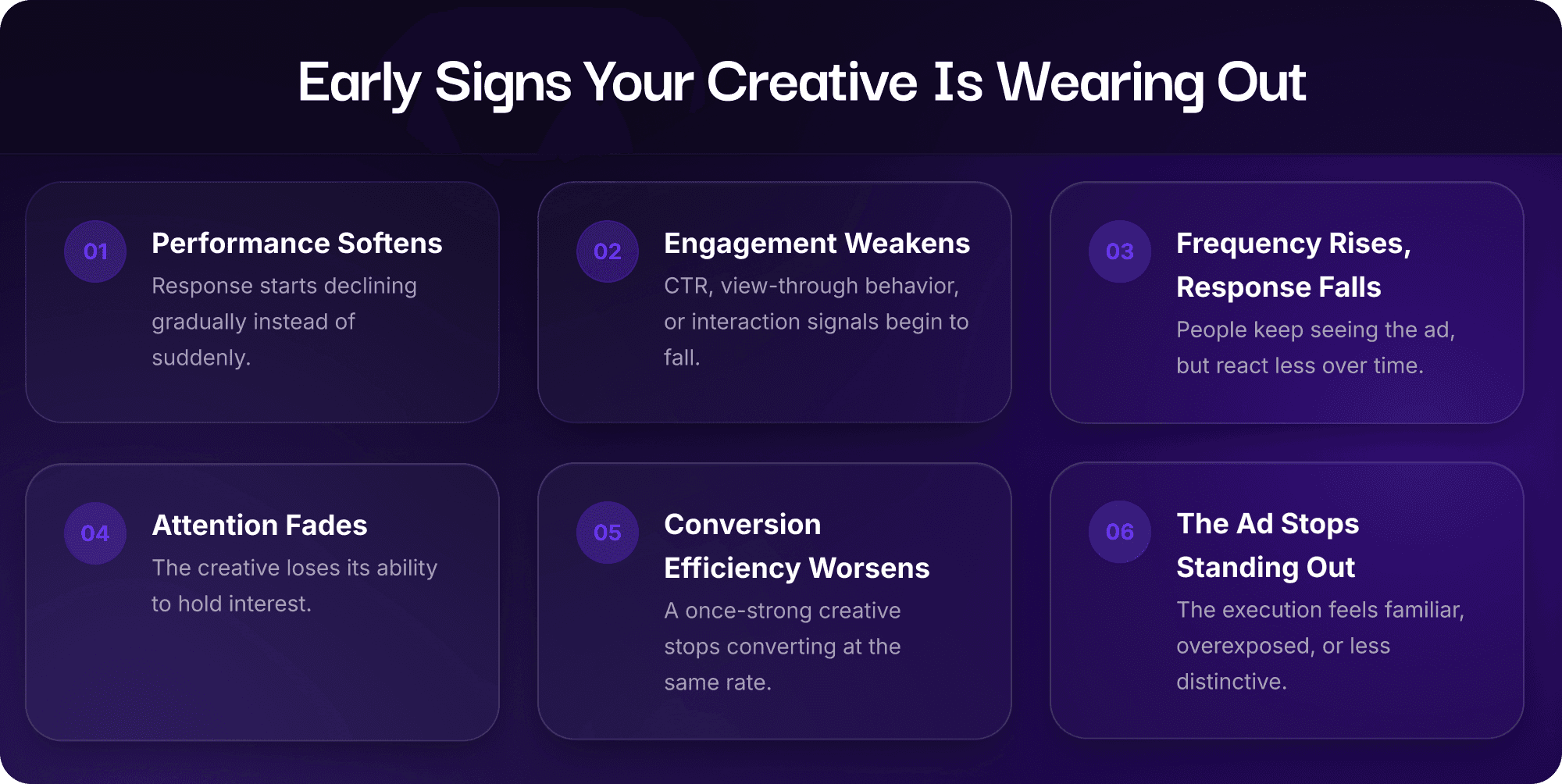
Performance starts softening
One of the first indicators is an ad performance drop that is gradual rather than sudden. The creative is still running, but it is no longer producing the same level of response.
Engagement weakens
CTR, view-through behavior, or other engagement signals may start declining even if reach and delivery remain stable.
Frequency rises while response falls
This is one of the clearest signs of ad fatigue. The audience keeps seeing the ad, but the ad is no longer creating the same reaction.
Attention fades
A creative that once captured interest may start losing its ability to hold attention. This can happen before larger conversion or efficiency issues appear.
Conversion efficiency worsens
When a once-strong creative stops converting at the same rate, it may be a sign that the audience is becoming less responsive to the execution.
The ad stops standing out
Sometimes the issue is qualitative before it is fully visible in hard metrics. The creative simply feels overexposed, too familiar, or less distinctive than before.
The goal is not to assume every drop means fatigue. It is to recognize patterns of declining creative performance early enough to investigate before waste grows.
Creative Fatigue vs Ad Fatigue
In practice, many marketers use creative fatigue and ad fatigue almost interchangeably. There is a lot of overlap, and for most teams the distinction does not need to be overly academic.
A practical way to think about it is this:
Ad fatigue often describes the broader campaign symptom: performance declines because the audience has seen the ad too often.
Creative fatigue focuses more specifically on the creative itself losing strength over time.
So if someone asks about ad fatigue, they are usually talking about overexposure and weakening response. Creative fatigue sits inside that same problem, but from the lens of the asset: the message, visual, format, or hook is no longer working as effectively as it did before.
That distinction is useful because it helps teams ask the right next question: is the issue really fatigue, or is something else in the campaign underperforming?
What to Do Next When Creative Fatigue Appears
Once fatigue starts showing up, the answer is not always to throw everything away. The smarter move is to diagnose what is weakening and optimize with intent.
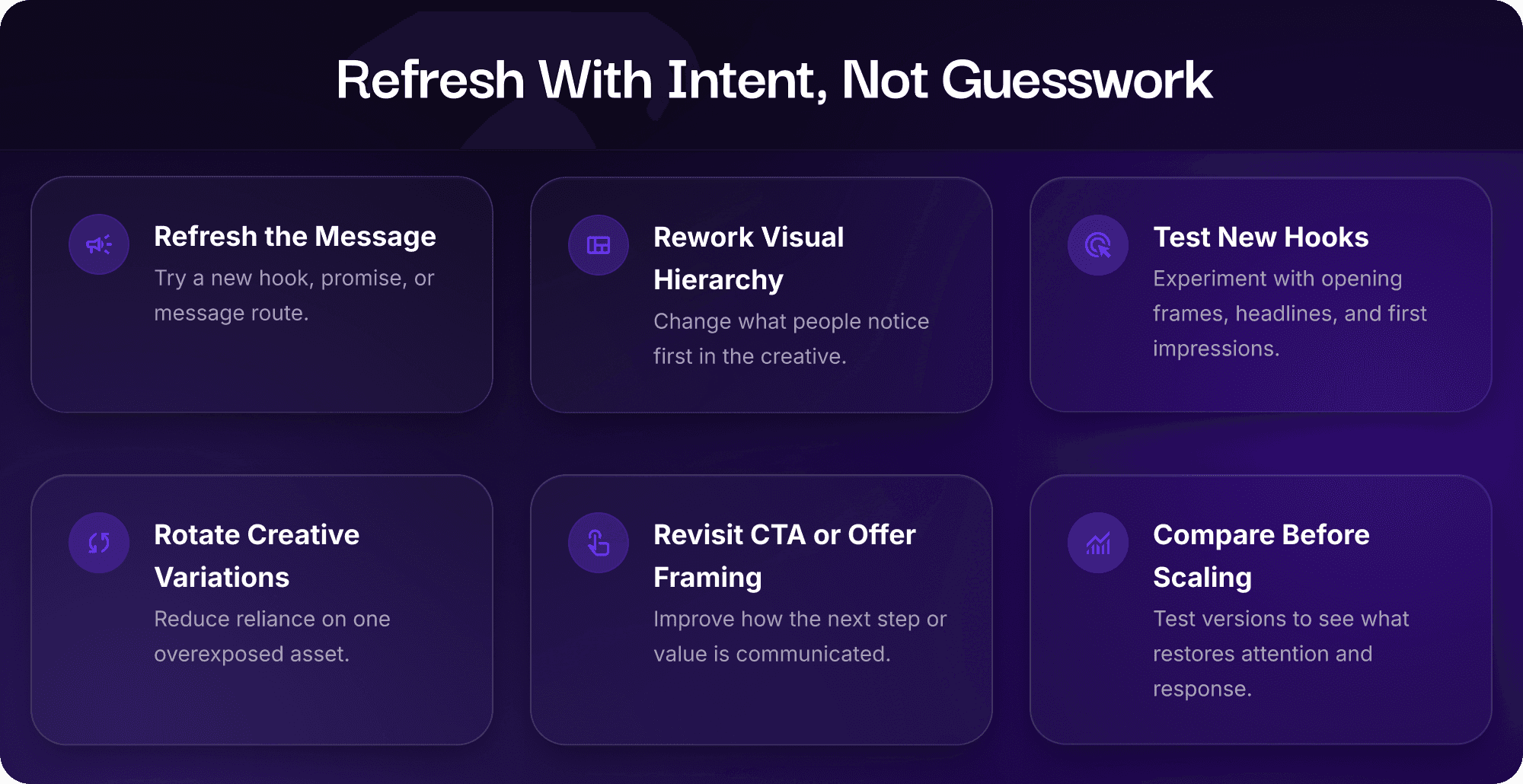
Refresh the message
If the same promise or framing has been repeated too long, a new hook or message route may help restore relevance.
Rework the visual hierarchy
Sometimes the issue is not the whole concept, but what people notice first. Changing emphasis, layout, or the main visual cue can help the ad feel fresher.
Test new hooks
Opening frames, headlines, first impressions, and core visual entry points often have an outsized impact on response.
Rotate creative variations
A stronger variation strategy can reduce reliance on one overexposed asset and slow the pace of fatigue.
Revisit CTA or offer framing
If attention is still present but action is falling, the issue may be how the next step is being communicated.
Compare versions before scaling again
This is where creative optimization becomes important. Rather than guessing what to change, teams should compare variations to understand what is actually helping restore performance.
The goal is not just to refresh creative for the sake of novelty. It is to improve creative effectiveness by identifying what is no longer landing and what needs to change next.
What Creative Fatigue Does Not Mean
Not every weak result is fatigue.
Sometimes a performance dip comes from:
targeting changes
poor media placement
weak offer-market fit
audience quality issues
campaign setup problems
seasonal shifts in demand
That is why teams should not treat every underperforming ad as a fatigued one. A diagnosis-first approach matters.
Creative fatigue is one explanation for declining results, but not the only one. Good marketers separate creative wearout from broader campaign issues before deciding what to fix.
How Decode by Entropik Helps
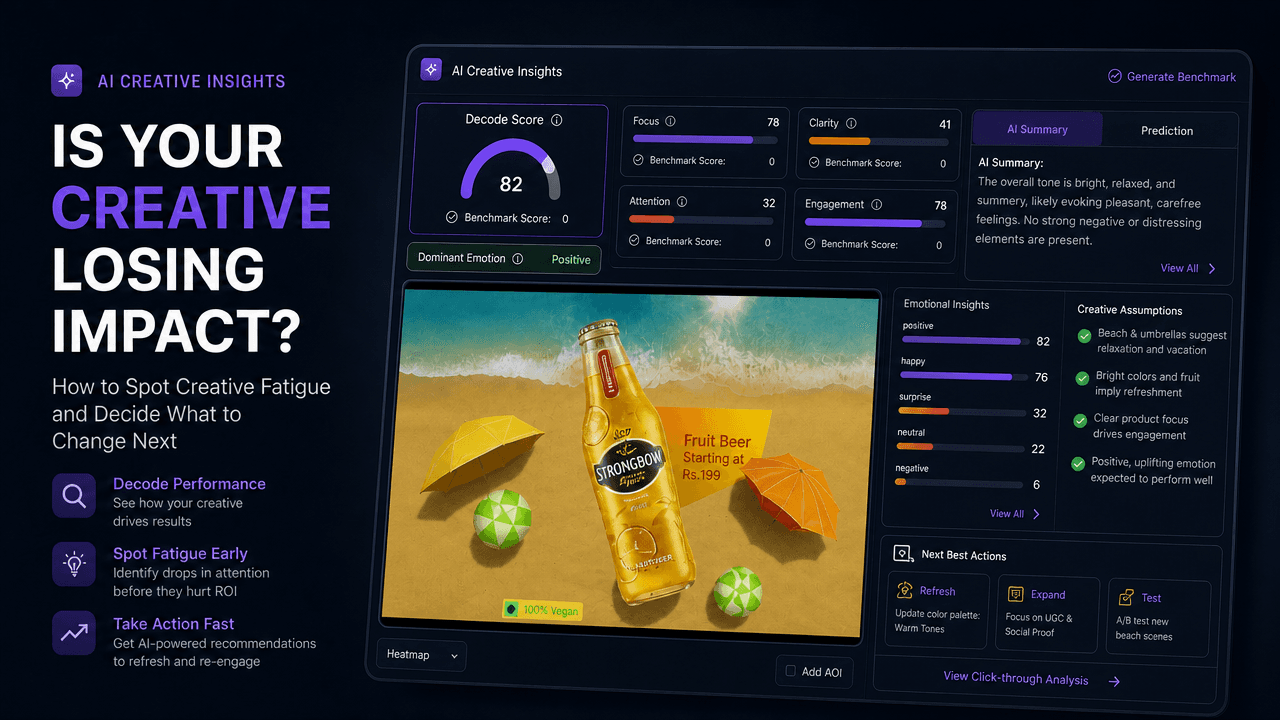
For teams trying to catch creative fatigue before performance drops further, Decode by Entropik can help make the diagnosis clearer.
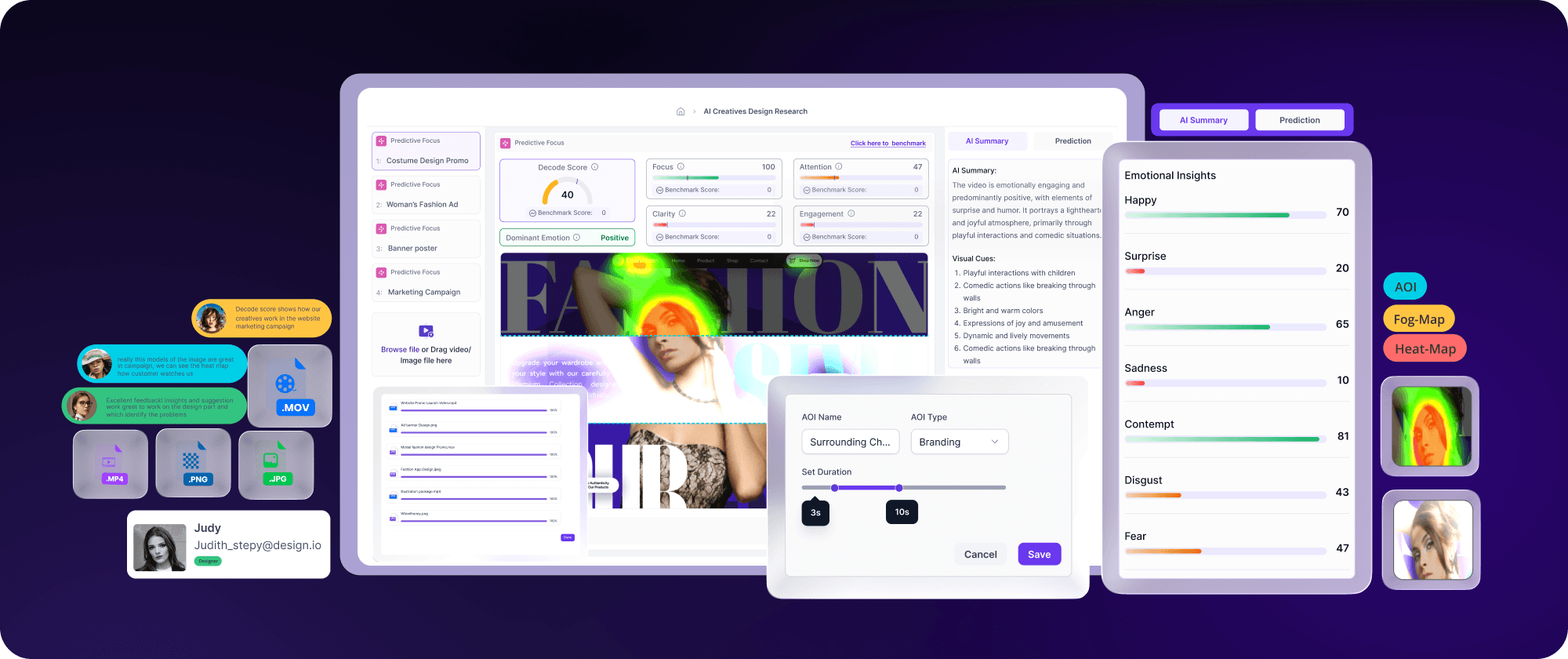
With Decode AI Creative Insights, teams can:
identify weakening creative signals before fatigue becomes more costly
understand which parts of the creative are losing impact
compare variations to see what still captures attention
connect emotional and attention signals to declining response
support faster creative optimization decisions before fatigue worsens
make more informed refresh decisions instead of relying only on late-stage performance drops
That makes Decode useful for teams that want to spot creative fatigue early, understand what is driving it, and take more confident next steps before performance falls further.
Final Thoughts
Creative fatigue is common, but it does not have to catch teams by surprise.
A creative that performed well at launch can weaken over time as audiences stop noticing it, stop responding to it, or stop finding it distinctive. The earlier teams spot that shift, the easier it becomes to diagnose the problem and respond with smarter optimization choices.
That is why creative fatigue matters. It is not just a sign to refresh creative. It is a signal to understand what is losing impact, what should change, and how to improve performance before more budget gets wasted.
Frequently asked questions
1. What is creative fatigue?
Creative fatigue occurs when an audience becomes overexposed to an ad, causing engagement and effectiveness to decline over repeated viewings.
2. How can you spot creative fatigue early?
Signs include declining click-through or engagement rates over time, increasing cost per result, and audience feedback signaling repetitiveness.
3. What causes creative fatigue?
It's typically caused by running the same ad creative for too long to the same audience without variation or refresh.
4. How can brands prevent or address creative fatigue?
Brands can rotate creative variations regularly, refresh messaging and visuals, and monitor performance metrics closely to catch fatigue before it significantly hurts results.
5. How often should ad creative be refreshed to avoid fatigue?
Refresh frequency depends on audience size and ad spend, but many brands refresh creative every few weeks to a couple of months for actively running campaigns.
Related Topic: