A UX research plan is a roadmap document detailing a study's research objectives, goals, and timelines for the relevant team and stakeholders, guiding research efforts step-by-step to keep a study on track. Beyond research efficiency, a solid plan aligns stakeholders around shared expectations and ensures the team gathers the proper data and insights needed to inform design and product decisions.

A Product/UX team has several challenges to deal with while creating a new product. Take the example of creating a new mobile app. Can you be sure that your app will meet the needs and expectations of your target audience? A well-thought-out UX research plan could be the answer to these questions. Let us look at what UX research is, why it could be helpful for UX research, and how to effectively create one using an existing template on Qatalyst.
What is a UX Research Plan?
A UX research plan is a roadmap that provides details about the research objectives, goals, timelines, etc., of a UX study in the form of a document for the relevant team and stakeholders. This would help you take the right steps in gathering insights about users and how they interact with your product. Essentially, it guides your research efforts step-by-step to ensure you stay on track for the entire duration of the study.
Why Do You Need a UX Research Plan?
If you are wondering why investing time and effort into creating a UX research plan is necessary. Well, think of it this way: would you embark on a road trip without a map or GPS? Probably not. Similarly, conducting UX research without a plan can lead to wasted resources and inconsequential results.
Let us look at some of the reasons you should have a well-crafted user research plan:
Structured Process: Putting a structure to your research process makes it easy to streamline efforts down the line. It provides clear direction for every step of your research activities. This makes sure you stay on track as you work towards the study objectives.
Research Efficiency: Having an outline helps you plan your methods and timeline in advance so that you can utilize your work hours more efficiently, track progress, and avoid unwarranted delays.
Stakeholder Alignment: UX research helps align stakeholders and other relevant collaborators by making sure everyone is on the same page. This helps everyone involved understand and establish expectations and goals upfront.
User Insights: Ultimately, All of the steps help you gather proper data and insights that can be used to improve design and product decisions.
{{cta-trial}}
How do I use this UX Research Plan Template on Qatalyst?
Step 1: Log in to the Qatalyst platform to access the dashboard homepage.
Step 2: Go to the top right and select the Study Templates button to get predefined template options for different types of research.

Step 3: Qatalyst is a very customizable platform. For the perfect UX Research Plan, you can use a combination of question blocks as per your study objectives. In this case, let us select the Usability Testing option as an example.
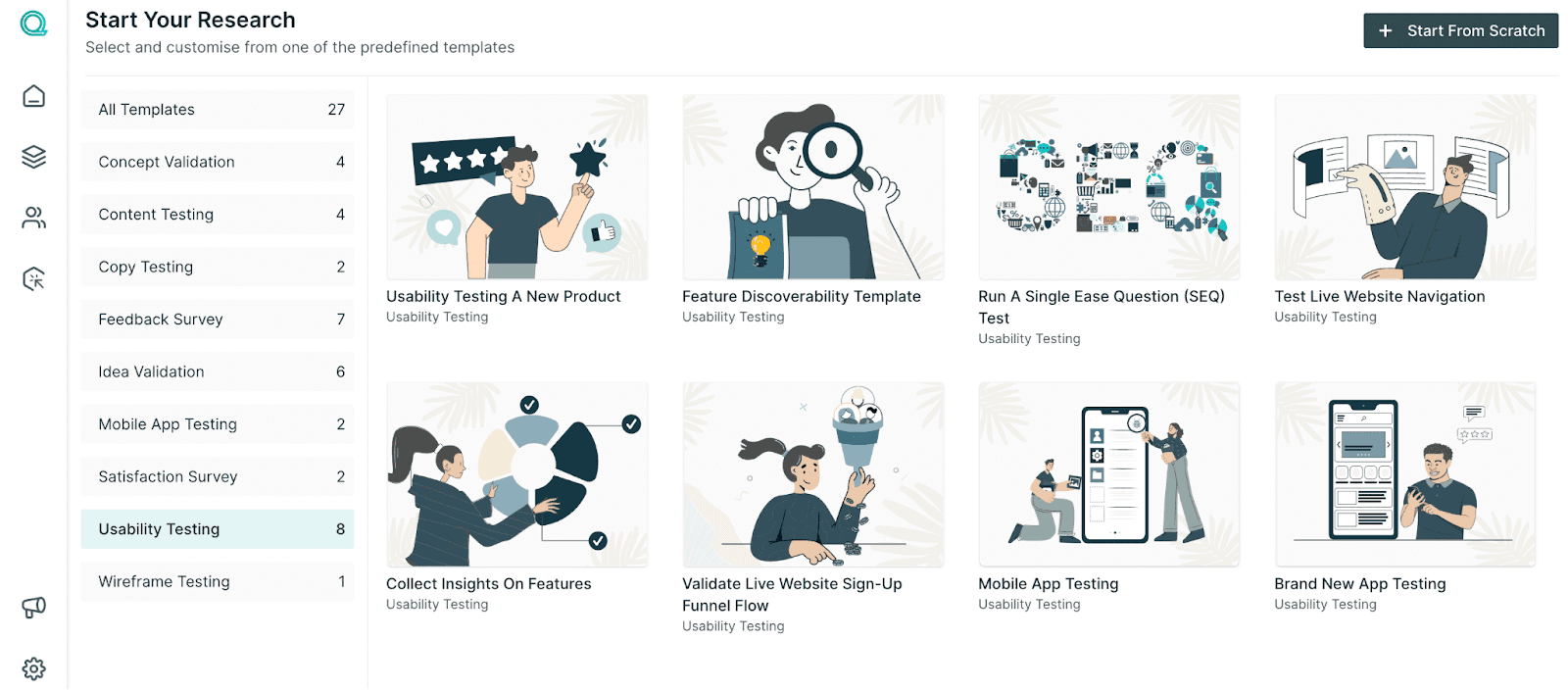
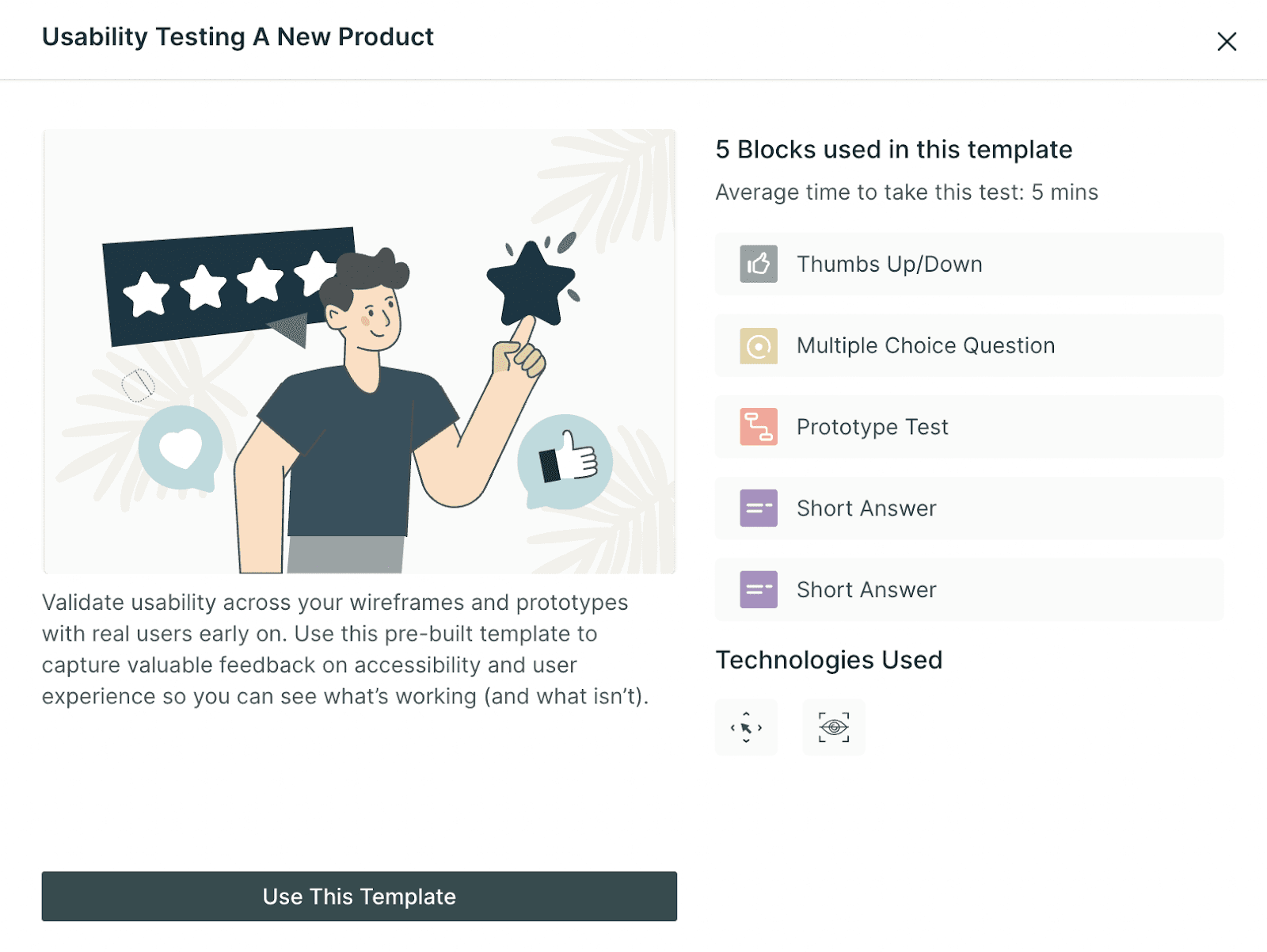
Step 4: Upon selecting, a dialog box will pop up. Select the Usability Testing a New Product Template and click on the Use This Template button to get started.
Step 4: Now you have a draft version of the study with a Welcome Page in front of you. You can add a test description for the users on the page. On the top left, type in the name of the study.
Step 5: The left panel includes different block options for the survey with predefined questions. You can add, delete, and rearrange question blocks.
Step 6: The right panel includes properties, design, and logic options for changing layouts, colors, etc. For example, you can replace the existing image on the welcome page and add a more relevant one.
Step 7: It can be customized further by changing questions to suit your product review objectives. Click on the "+" button on the left to add a combination of study blocks like Checkbox, Preference Test, etc. Since the template is completely customizable, add, delete, and change blocks as required.
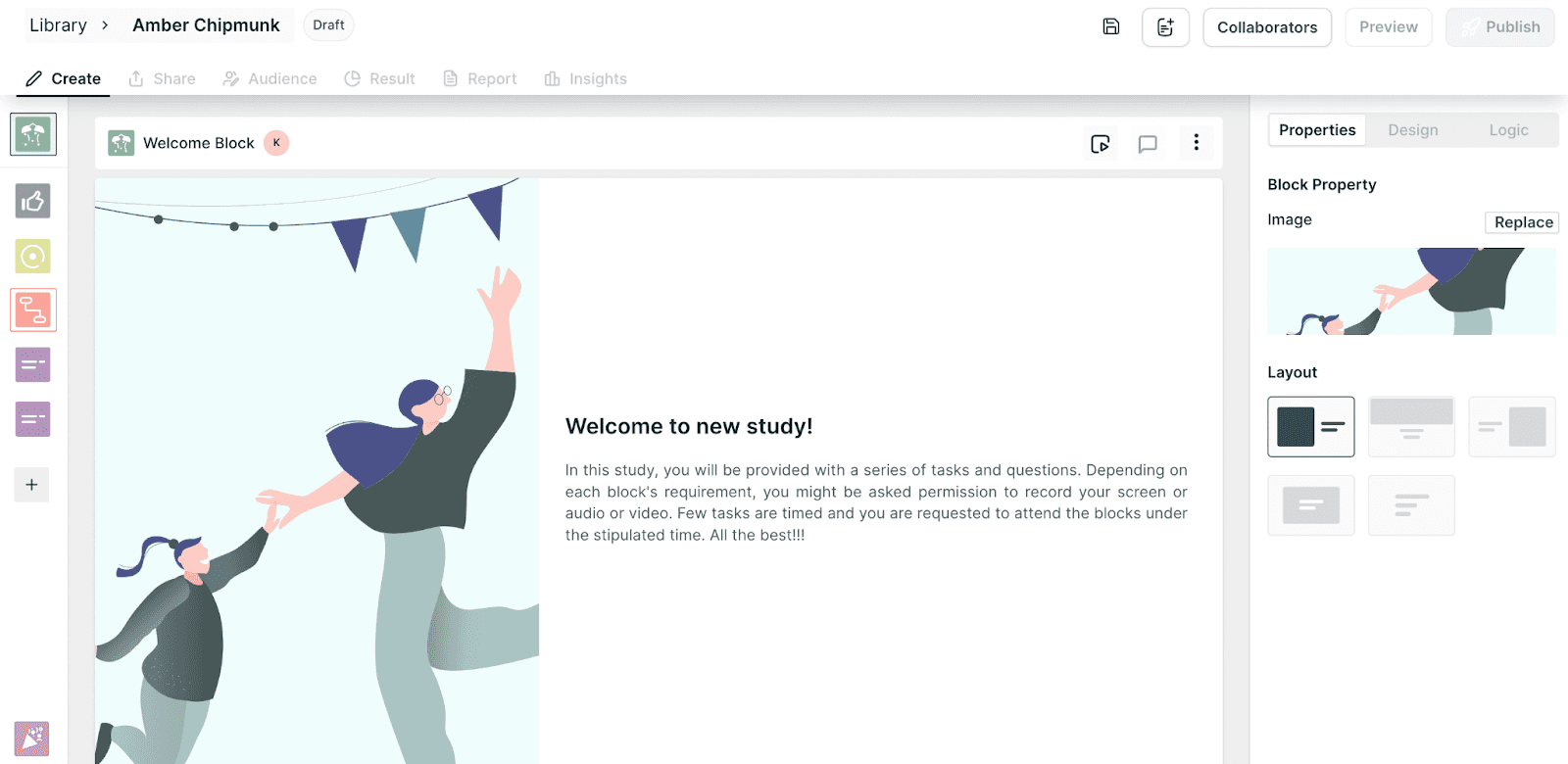
Once a test is set up, you can preview and publish the test with buttons available on the top right of the page.
Best Practices for Creating a UX Research Plan
These are some of the best practices for creating questions for the research plan template:
Define Clear Objectives: Start by clearly outlining what you want to achieve with your research. Whether it's understanding user behavior or identifying pain points, defining your objectives will keep your research focused and effective.
Understand Your Audience: Get to know your users and their needs. Tailor your research methods and questions to gather relevant insights by understanding who your audience is and what they expect from your product or service.
Methodologies: Select research methods that align with your objectives and the nature of your product. Whether it's user interviews, surveys, or usability testing, choose methodologies that will provide the most valuable insights.
Recruit Diverse Participants: Ensure your participant pool represents your target audience. Consider demographics, behavior patterns, and experience levels to gather a comprehensive range of insights.
Data Analysis: Once you've collected data, make sure it is analyzed properly to identify patterns and trends. These findings should be able to turn into actionable recommendations that can address your initial objectives.
Iterate and Refine: Use the insights gained from your research to inform design decisions and improvements to your product or service. UX research is an iterative process, so be prepared to go back and refine your approach based on ongoing feedback and evaluation.
{{cta-trial}}
Frequently asked questions
1. What is a UX research plan?
A UX research plan is a structured document outlining research objectives, methodology, target participants, timeline, and how findings will be used.
2. Why is a research plan template useful for UX teams?
It ensures consistency and thoroughness across studies, helping teams avoid skipping important planning steps that could affect research quality.
3. What should a UX research plan template include?
A good template includes research objectives, chosen methodology, participant screening criteria, timeline, and a plan for synthesizing and sharing findings.
4. How detailed should a UX research plan be for a small, quick study?
Even small studies benefit from a lightweight plan covering objectives and methodology, though it can be less formal than plans for larger, more complex research.
5. How can a UX research plan improve stakeholder alignment?
Sharing the plan with stakeholders before research begins helps ensure everyone agrees on objectives and expected outcomes, increasing the likelihood findings will be used.
Related Topic: