Overall Score
81 / 100
Highest Focus
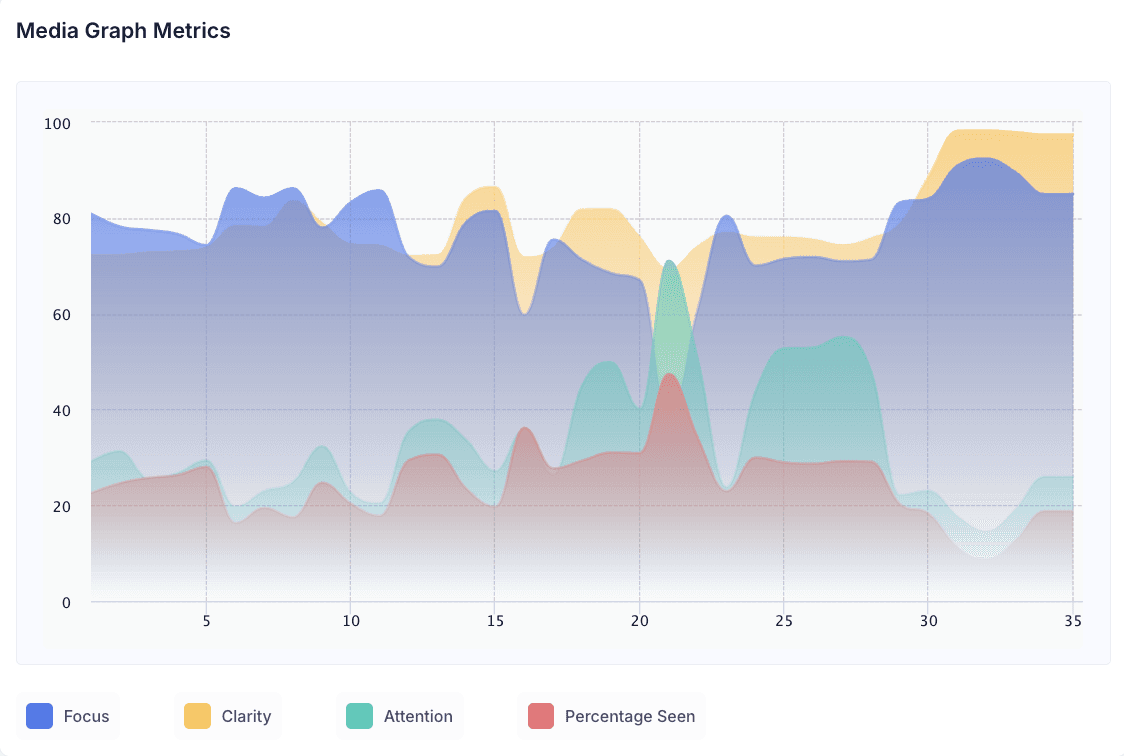
92 at 0:32
This lands inside the branded end card sequence, right as "we get your pet" and the Rover logo resolve the film. Focus peaking here, at almost the exact second Clarity also peaks (0:31), suggests viewers are mentally locking onto the payoff rather than drifting once the joke has landed. That's a useful signal for a story-first ad: the risk with delayed branding is always that viewers check out once the entertainment portion ends. Here, focus does the opposite. Viewers appear to stay locked in specifically to see how the joke resolves into a brand promise.
Lowest Focus
38 at 0:21
This is mid-buildup, when the edit is cutting between the dog and the trash can without yet explaining why. Focus dipping here isn't necessarily a flaw. The ad is intentionally ambiguous at this point, deliberately trading clarity for curiosity. A dip in Focus during an unresolved mystery beat is consistent with viewers processing an odd juxtaposition (dog, trash can) before they have the framework to interpret it. The dip is the cost of the curiosity gap the ad is trying to create, not evidence that the gap failed.
Highest Clarity
98 at 0:31
This is the moment the branded end card lands, immediately after "Find a walker who knows exactly which trash can is Buck's trash can" has already been read and the story has closed. A near-ceiling Clarity score here confirms the mechanics work: the joke resolves, then the service context (Drop-In Visits, Rover, "we get your pet") arrives cleanly on top of an already-understood premise. Clarity peaking after the joke rather than during it is the right sequencing for a two-part structure like this one.
Lowest Clarity
69 at 0:21
Notably, this is the same second as Lowest Focus and Highest Attention. That combination is the clearest evidence in the data that the ad is running a genuine curiosity gap rather than just an unclear moment. At 0:21, viewers are visually locked onto the dog and the trash can (Attention is highest here) but don't yet have the information to understand what they're watching (Clarity is lowest here). Attention without clarity is exactly what a mystery-before-punchline structure should produce. It confirms the ad is holding people through confusion rather than losing them to it.
Highest Attention
71 at 0:21
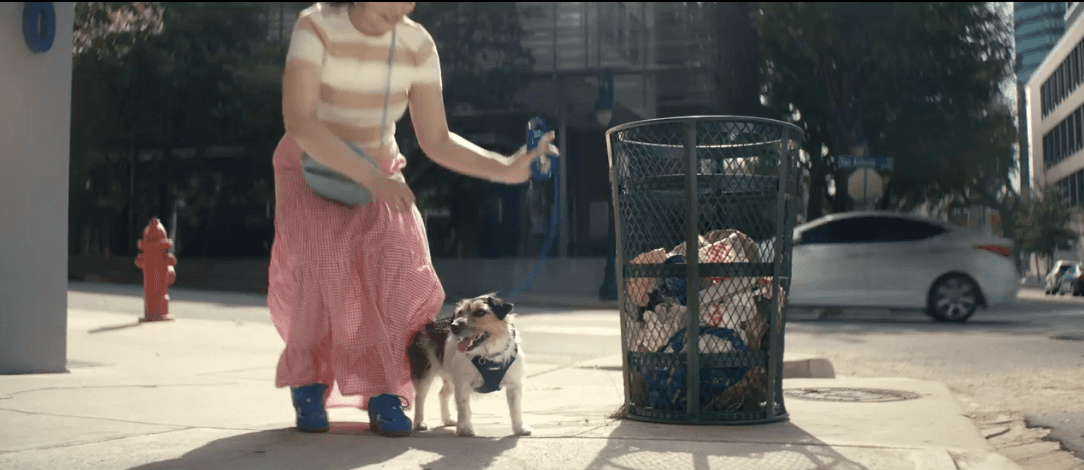
This coincides with the "trash can with dog nearby" beat, where the edit finally puts Buck and his object of fixation in the same frame after several intercut close-ups. That pairing is the visual crux of the joke: a dog and a trash can, treated with unwarranted cinematic seriousness. It's the moment the visual mismatch between subject matter and treatment is most stark, and that mismatch is what earns the attention spike.
Lowest Attention
14 at 0:32
This is the branded end card, the same second Focus peaks. The pattern here is a familiar one in story-first advertising: once the narrative has resolved, the visual novelty drops sharply because the screen shifts to static logo, tagline and app badges. Low Attention on a static end card isn't unusual, and paired with the highest Focus score in the whole film, it points to viewers who are still cognitively engaged with the payoff even though there's less on screen to visually capture them. The drop is functional, not a sign the ending underperforms.
Summary
Rover turns a dog's irrational attachment to a specific trash can into proof that its walkers pay attention.
The ad opens by giving a public trash can the visual weight of a cinematic objective, holding on it, reframing it, returning to it, before the dog or the walker are properly introduced. That's a deliberate inversion. Ordinary pet-service advertising would open on the dog, or the walker, or the leash. Rover opens on garbage, and treats it with total sincerity. The effect is a built-in question: why does this object matter enough to earn this much screen time?
The middle section escalates that question through repetition rather than explanation. Close-ups of Buck's face, cuts back to the trash can, the dog approaching it with visible purpose, all of it plays as comedy specifically because the seriousness of the treatment is disproportionate to the object. The Decode data supports this reading directly. Attention peaks and Clarity bottoms out at the same second (0:21), which is the moment the dog and the trash can share a frame without explanation. Viewers are watching closely precisely because they don't yet understand what they're watching.
The reveal, "Find a walker who knows exactly which trash can is Buck's trash can," converts the joke into the pitch. The behavior isn't random, it's Buck's specific routine, and the punchline is that a good walker would already know this. That's the insight the wider campaign (per The Drum's coverage of "We Get Your Pet") is built on across its three films: a stuffed bunny that can't be replaced, a cat's fixation on bubbles, and Buck's trash can are all offered as evidence of how much there is to learn about an individual pet. Rover isn't claiming its sitters know every animal. It's claiming they'll take the time to learn yours, and the trash can is the proof of concept.
The one place the data flags something worth naming: Attention (33) is meaningfully lower than Focus (77) or Clarity (80). For a service ad that depends on a single visual joke to carry 30 seconds, that gap suggests the film is winning people over through narrative payoff more than through visual novelty. That's a defensible trade for this kind of story, but it does mean the ad leans more on patience than spectacle, and a viewer who disengages early (before the 0:21-0:24 payoff window) may not get pulled back in by the visuals alone.
Emotional Insights
Positive 74, Happy 72, Neutral 34, Surprise 18, with Negative sitting at only 8 overall (Sadness 8, Fear 4, Disgust 3, Anger 2, Contempt 1).
The dominant read is straightforward warmth rather than big comedic surprise. Surprise at 18 is present but modest, which fits a joke built on slow accumulation (repeated cuts between dog and trash can) rather than a single jolt or twist. The Neutral score of 34 is also worth reading carefully. Rather than indicating disengagement, a neutral-but-positive profile like this is consistent with a mystery-format ad: viewers are processing and puzzling through the trash can setup cognitively before the emotional payoff of the reveal, so a portion of the runtime registers as calm attention rather than active amusement.
The near-absence of negative emotion matters for a brand built on trust. Rover is asking pet owners to hand their animal to a stranger, a proposition that could easily carry anxiety or skepticism. The fact that Sadness, Fear and Disgust all sit in single digits suggests the ad avoids introducing any of the anxiety inherent in its own premise (leaving your pet with someone else) and instead keeps the entire experience in comfortable, affectionate territory. The emotional tone directly supports the strategic goal: this is reassurance dressed as comedy, not comedy that risks undercutting the trust message.
The Commercial
Heatmap Video
Fogmap Video
Suggestion for Improvement
Strengthen mid-film visual novelty to protect against early drop-off. The middle stretch (roughly 0:11 to 0:22) relies on repeated cuts between the dog and the trash can to build the mystery, and Attention overall sits at only 33 despite Focus and Clarity being strong. Since the payoff doesn't land until 0:24-0:28, viewers who lose visual interest before then have less reason to stay than the eventual joke deserves. A small variation in framing or pacing across those repeated trash-can cutaways (rather than a near-identical shot returned to multiple times) could sustain visual interest through the setup without shortening it or giving away the reveal early.
Consider whether the reveal window can be widened slightly. LC (69) and HA (71) both land at 0:21, right at the edge of the payoff sequence, which suggests some viewers are still processing the setup at the exact moment the story is about to resolve. This isn't a functional problem, since Clarity recovers sharply by 0:31, but a beat of extra breathing room between the final "mystery" cutaway and the on-screen copy reveal could let the joke register for a slightly wider portion of the audience before the resolution arrives.
No changes needed to branding or service clarity. Clarity peaks at 98 immediately after the end card appears, and Focus is highest at that same point, so the delayed branding strategy is working exactly as intended here. This is a refinement opportunity on pacing through the middle section, not a structural fix.
Decode Takeaway
Decode shows an ad that wins through patience rather than spectacle. Focus and Clarity both peak once the joke is fully resolved, not during the visual repetition that builds it, which confirms the mystery structure is doing its job: viewers stay cognitively engaged through an unexplained setup and reward the payoff with the strongest comprehension scores in the film. The tradeoff is Attention, which trails well behind Focus and Clarity throughout, indicating the ad's core strength is narrative payoff rather than moment-to-moment visual pull. For a brand promise built on trust and close attention to a pet's individual quirks, that's a fitting mechanism, the ad asks for the same patience from the viewer that it claims its walkers give to pets.