Creative testing matters because creative execution, not just targeting or budget, often accounts for the biggest swing in campaign performance, yet it's one of the easiest factors to misjudge on instinct alone. Testing concepts against real audience attention, emotion, and behavior before launch helps brands identify which creative elements actually drive engagement rather than relying on subjective opinion.
Why Some Creatives Drive Results While Others Fail
Every brand invests in creative. But only a small number of campaigns truly capture attention, build recall, and influence decisions.
The difference is not just aesthetics. It is psychology.
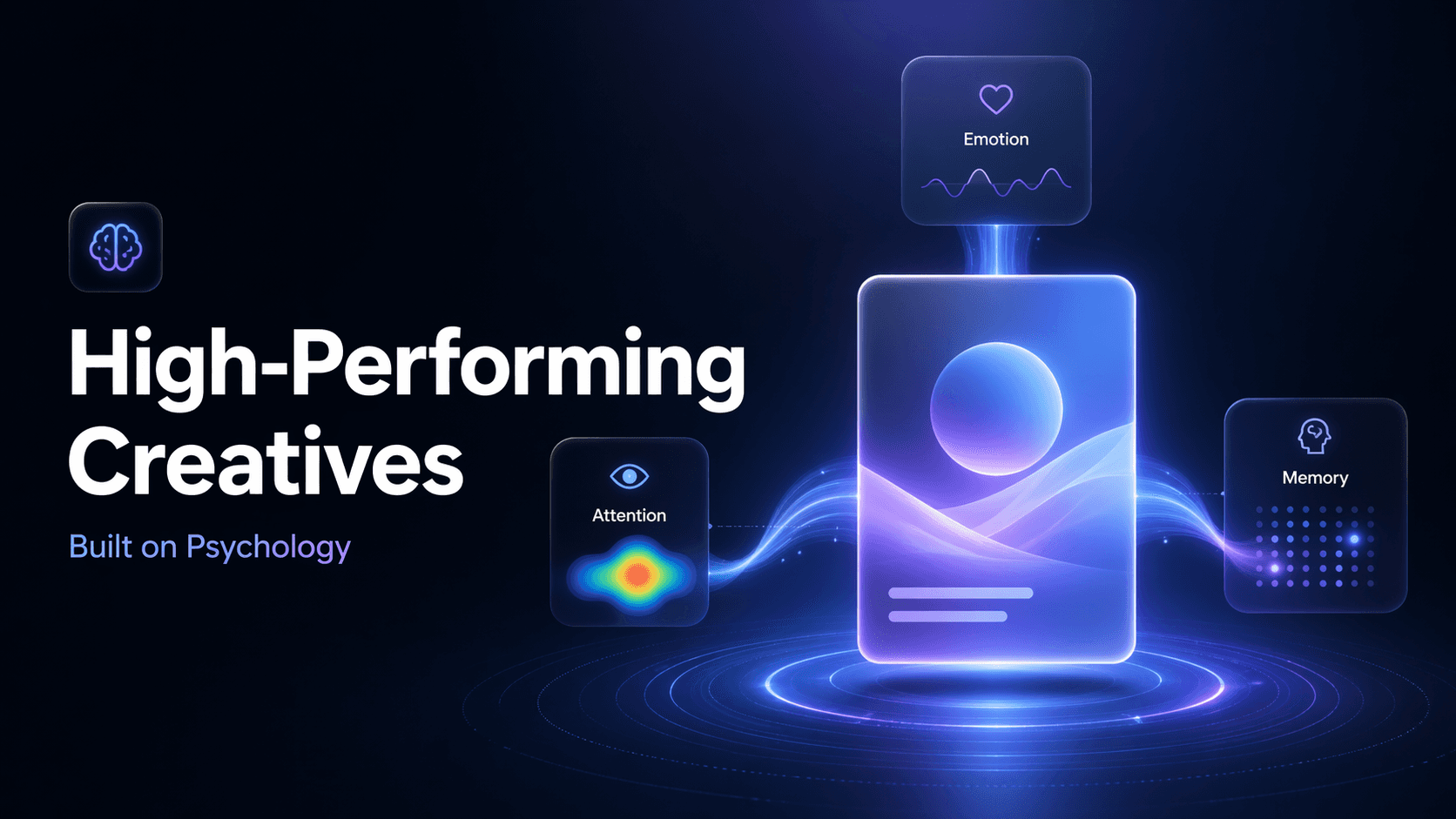
High-performing creatives work because they align with how the brain processes emotion, attention, and memory. That is also why creative testing matters. Without it, brands often judge ideas by internal opinion instead of real audience response.
Research consistently shows that emotional response, not just information, is one of the strongest drivers of purchase intent. That makes the psychology behind performance too important to leave to instinct alone.
Creative Is Not About Looks. It Is About How It Feels
Most brands still evaluate creative using familiar criteria:
visual appeal
messaging clarity
brand guidelines
Those things matter, but they are not the full story.
People do not respond to creative logically first. They respond emotionally. Strong work taps into emotion, cognitive bias, and behavioural triggers before the audience ever starts analyzing the message in detail.
This is where advertising psychology becomes useful. It helps explain why some creatives feel immediate and memorable while others feel polished but ineffective.
The Three Psychological Drivers of High-Performing Creatives
1. Emotion first, logic later
The most effective creatives trigger emotion quickly.
Why this works:
the brain processes emotions faster than rational thought
emotional responses strengthen memory
feelings shape action
This is one reason emotional advertising is so powerful. Creatives that trigger empathy, humour, nostalgia, tension, or desire tend to stay with people longer than messages built only around features.
When campaigns make people feel something meaningful, they are more likely to:
be remembered
be shared
create stronger brand affinity
2. Attention is the entry point
Creative has one job before anything else: make people stop.
Attention is not just visibility. It is:
what people notice
what they focus on
what they process
This is why attention in advertising matters so much. If the creative fails to guide attention, it does not matter how strong the message is supposed to be.
High-performing creatives often use:
contrast
motion and pacing
visual hierarchy
unexpected elements
But attention alone is not enough. It must move people toward understanding, emotion, and memory.
3. Memory and recall drive business impact
This is where many creatives fall short. They win attention for a moment, but they do not create memory.
High-performing creatives:
create strong associations
connect emotion to the brand
reinforce recall over time
That is what makes ad recall important. If people remember the feeling but not the brand, the creative has only done half the job.
Consumers rarely remember a list of features. They remember what the creative made them feel and what brand that feeling became attached to.
The Role of Storytelling in Creative Performance
Storytelling is one of the most powerful tools in marketing because it creates structure for emotion, memory, and meaning.
It works because it can:
deepen engagement
hold attention longer
improve recall
This is where creative performance becomes more than design quality. Performance comes from whether the story helps people connect the message, the feeling, and the brand.
Narrative-driven work often outperforms feature-led advertising because stories make the experience easier to process and easier to remember.
The Science of Subconscious Influence
Most decisions are not fully conscious.
Research in neuromarketing and advertising psychology shows that people are influenced by emotional and implicit signals long before they can clearly explain their reactions.
That is why there is often a gap between:
what people say
what they feel
what they actually do
Traditional feedback may capture stated opinion. Stronger creative testing helps brands understand what the audience actually experienced in the moment.
A Real-World Scenario
Imagine a brand launches two creatives.
Creative A
clean design
clear messaging
strong product focus
Creative B
emotion-driven story
relatable characters
subtle brand integration
The result:
Creative A gets views
Creative B drives stronger ad recall and more conversions
Why?
Because Creative B:
engages emotionally
builds memory
connects with real-life context
This is the difference between content that is merely visible and content that performs.
What High-Performing Creatives Do Differently
They are not just creative. They are built with a better understanding of human response.
They:
trigger emotion quickly
capture and sustain attention
build stronger memory structures
align with real motivations
connect the brand to the feeling
This is also where emotional advertising and creative performance come together. The work performs better not because it looks more polished, but because it creates a stronger psychological response.
The Challenge for Modern Brands
Marketers often struggle because:
creative decisions are subjective
feedback is incomplete or biased
performance is measured too late
That leads to:
ineffective campaigns
wasted media spend
missed opportunities
Many brands only discover weak performance after launch, when the cost of poor decisions is already visible.
How Brands Can Build High-Performing Creatives
To build more effective work consistently, brands need to:
test emotional response before launch
measure attention, not just impressions
understand subconscious behaviour
iterate using real consumer signals
That is why creative testing should not be treated as an optional step. It is one of the most practical ways to improve both creative effectiveness and long-term campaign impact.
It also strengthens ad effectiveness, because better creative decisions improve what people notice, what they remember, and what they do next.
How Decode by Entropik Helps
Decode by Entropik helps brands move from subjective judgment to data-informed decision-making.
With Decode, brands can:
measure attention using eye tracking
understand emotional reactions through facial coding
analyse how people engage with creatives
identify what drives recall and impact
test and optimize work before launch
This helps teams improve creative performance in a more reliable way by grounding decisions in real human response rather than assumption alone.
Final Thought
High-performing creatives are not accidental. They are built at the intersection of psychology, emotion, and behaviour.
In a crowded market, the brands that understand how people feel, think, and remember will create the work that wins.
And the brands that use creative testing well will be in a much stronger position to do it consistently.
Frequently asked questions
1. What psychological principles drive high-performing creative content?
High-performing creative often taps into emotional triggers, visual attention patterns, and cognitive ease, making content memorable and easy to process.
2. Why does creative testing matter for marketing performance?
Creative testing validates whether an ad will resonate emotionally and capture attention before committing media budget, reducing the risk of underperforming campaigns.
3. What metrics indicate high-performing creative?
Key indicators include attention capture in the first few seconds, positive emotional response, and strong brand recall after exposure.
4. What emotional triggers are most effective in high-performing ads?
Common effective triggers include humor, surprise, nostalgia, and empathy, each of which can boost attention and memorability when used authentically.
5. How does cognitive ease affect creative performance?
Content that's simple and easy to process tends to be better received and remembered, since the brain favors information that requires less mental effort to understand.
Related Topic: