Overall Score
83 / 100
Highest Focus
79 at 24s
Focus peaks during the later in-car moments where:
The relationship between occupants is fully established
Visual clutter is minimal
The emotional message has already landed
At this point, viewers are no longer decoding the story — they are emotionally aligned with it, allowing attention to stabilize.
Lowest Focus
34 at 19s
Focus dips during a transitional segment where the film shifts from the older vehicle to the newer one.While symbolically important, the narrative cue is subtle, momentarily diffusing visual and cognitive focus as viewers recalibrate context.
Highest Clarity
87 at 10s
Clarity peaks early when the seatbelt action is first introduced.The gesture is universally understood, visually clean, and emotionally unambiguous — instantly communicating safety, care, and responsibility without dialogue.
Lowest Clarity
57 at 15s
Clarity softens briefly during the time-transition moment.The emotional intent remains positive, but the symbolic shift requires a fraction more interpretation than earlier scenes.
Highest Attention
76 at 23s
Attention peaks just before the end, when:
Emotional payoff is clear
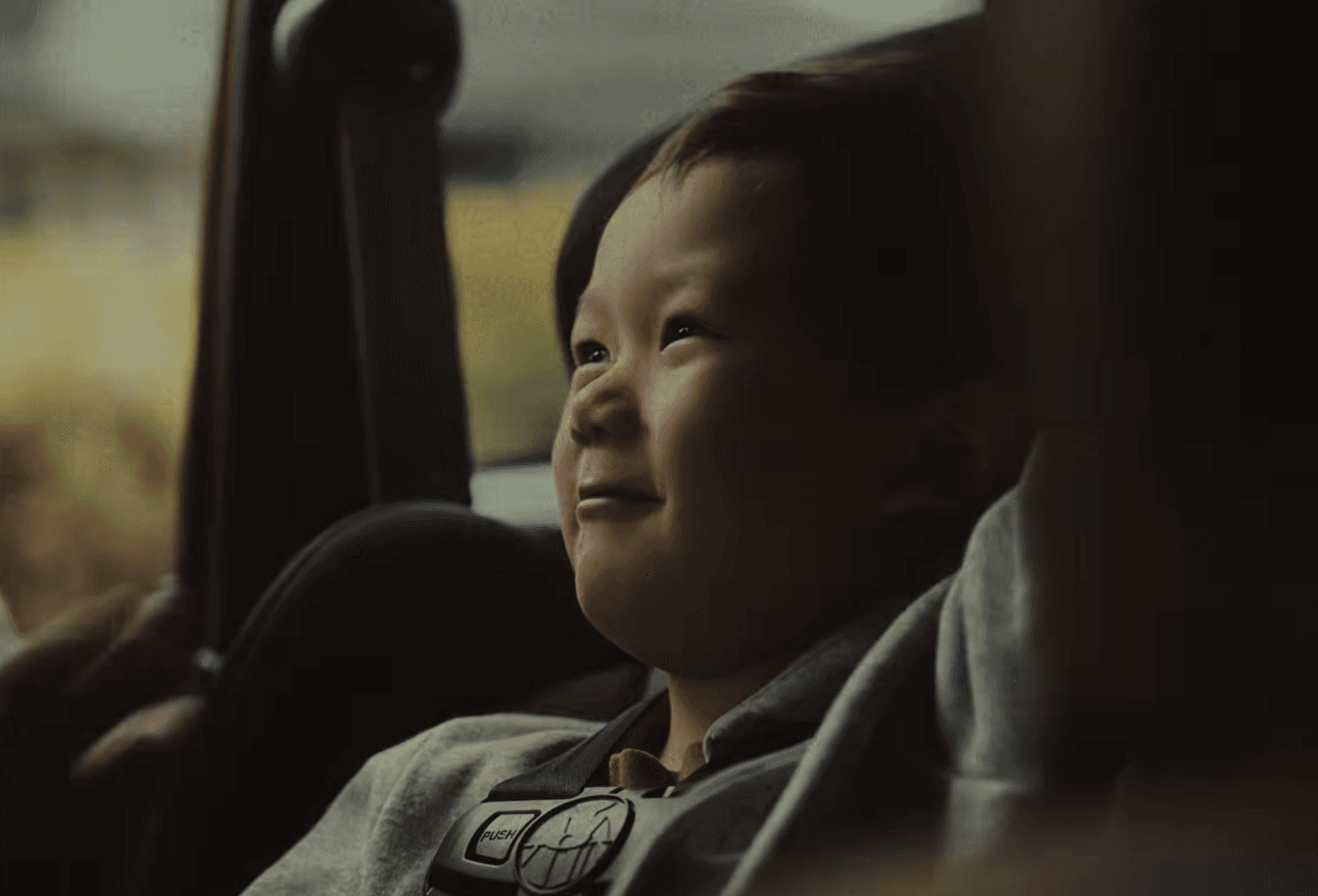
Faces are framed closely
Eye contact and shared smiles anchor the scene
Human faces and relational cues naturally pull attention, especially once viewers are emotionally invested.
Lowest Attention
23 at 24s
A small dip occurs immediately after the peak as the film moves into resolution.This is typical for emotionally resolved narratives, where tension release naturally lowers attention intensity.
Summary
“Superhero Belt” is built around a simple but emotionally powerful insight:
protection is a quiet, everyday act — not a dramatic one.
The narrative uses repeated moments of buckling a seatbelt across time to show how care, responsibility, and love are passed down through generations. The car becomes a shared emotional space — not just transportation, but a container for memory, safety, and connection.
Toyota positions itself as a constant across life stages, reinforcing trust rather than innovation spectacle.
Emotional Insights
The ad delivers a strongly positive emotional profile (88%), driven primarily by happiness (82%) and supported by low emotional volatility across the film.
Negative emotions remain minimal (fear 5%, sadness 8%, anger 2%), ensuring the experience feels safe, reassuring, and emotionally stable throughout.
Rather than surprise-led storytelling, Toyota leans into emotional familiarity and continuity, allowing viewers to settle into the story instead of being pulled by tension.
The Commercial
Heatmap Video
Fogmap Video
Suggestion for Improvement
To lift mid-film focus, a slightly stronger visual cue (sound, framing, or repeated motion) could reinforce the time transition.
The brand moment could arrive half a beat earlier to capitalize on peak emotional attention before resolution.
A subtle auditory motif carried across time periods could strengthen narrative cohesion without adding complexity.
These refinements could elevate focus consistency while preserving the film’s emotional restraint.