An in-depth interview (IDI) is a one-on-one qualitative research method where a researcher has a detailed conversation with a single participant to explore their perspectives, experiences, and motivations on a topic. Unlike surveys, IDIs allow researchers to ask follow-up questions and probe deeper into the "why" behind consumer choices, uncovering subconscious motivations that structured questionnaires often miss.

In-depth interviews have long been one of the most powerful tools in consumer research. When done well, they uncover motivations, emotions, and context that surveys and dashboards can never fully capture.
But traditional in-depth interviews also come with challenges. They are time intensive, difficult to scale, and heavily dependent on moderator skill and manual analysis. Even then, much of what truly matters remains unspoken.
Today, AI-enhanced in-depth interviews are redefining how teams uncover deep consumer insight by capturing not just what people say, but how they feel while saying it.
Why In-Depth Interviews Still Matter
Surveys are great for scale. Analytics are great for trends. But when teams need to understand:
Why consumers behave a certain way
What emotions shape decisions
How perceptions form and change
What language people naturally use
Nothing replaces a one-on-one conversation.
In-depth interviews provide:
Rich qualitative context
Nuanced explanations
The ability to probe and adapt in real time
Human stories behind the data
However, traditional methods often fall short of their full potential.
The Problem with Traditional In-Depth Interviews
Despite their value, traditional interviews have clear limitations.
Much of the Insight Is Non-Verbal
Consumers often soften criticism, struggle to articulate emotions, or say what feels socially acceptable. Facial expressions, tone changes, and hesitation frequently reveal more than words.
Analysis Is Slow and Manual
Reviewing hours of recordings, transcribing interviews, tagging themes, and synthesizing insights can take weeks. This delays decisions and limits iteration.
Insights Depend on Moderator Interpretation
Different moderators may probe differently or interpret responses in inconsistent ways, introducing bias and variability.
Scaling Is Difficult
Running interviews across markets, languages, and segments increases complexity and cost, often forcing teams to compromise depth for speed.
The result is valuable conversations that still leave insight on the table.
Why In-Depth Interviews Need to Evolve
Modern research teams are expected to move faster, cover more markets, and deliver clearer recommendations with fewer resources.
To stay relevant, in-depth interviews must:
Capture emotional reactions, not just verbal responses
Reduce manual analysis time
Surface patterns across interviews consistently
Scale globally without losing depth
This is where AI-enhanced interviewing changes what is possible.
Uncover Deep Consumer Insights with AI-Enhanced Interviews
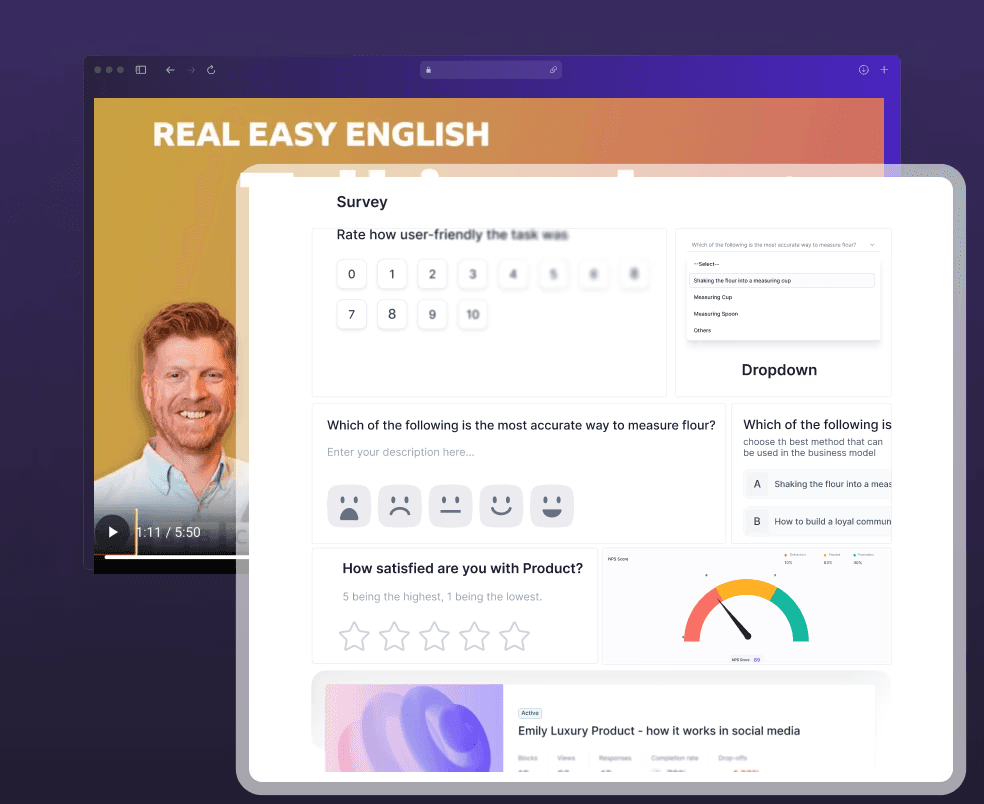
AI adds an intelligence layer to traditional interviews, helping researchers uncover insights that would otherwise remain hidden.
Platforms like Entropik enhance in-depth interviews by combining human conversation with Emotion AI and automated analysis.
The goal is not to replace the interviewer. It is to amplify what interviews are capable of revealing.
What You Can Do with AI-Enhanced In-Depth Interviews
Deeper Insight Discovery
AI-enhanced interviews uncover insights that surveys and focus groups often miss. Emotional cues, hesitation, and emphasis reveal underlying motivations and concerns that respondents may not explicitly state.
Teams consistently achieve deeper understanding of attitudes, needs, and barriers compared to traditional interview-only approaches.
Emotion-Enhanced Responses
By analyzing facial expressions and voice signals, AI captures genuine reactions such as:
Confidence or uncertainty
Delight or frustration
Engagement or disengagement
This emotional context adds critical depth to verbal responses.
Personalized Questioning
AI can suggest follow-up questions in real time based on emotional signals and conversation flow. This helps moderators probe deeper at the right moments without breaking rapport.
Automated Analysis
Both verbal and non-verbal data are processed automatically. Transcripts, emotional markers, and behavioral signals are analyzed together, reducing manual effort significantly.
Pattern Recognition Across Interviews
AI identifies recurring themes, emotional patterns, and key moments across dozens or hundreds of interviews, helping teams move from anecdotes to evidence.
Global Interview Capability
Interviews can be conducted across languages and cultures, with AI helping standardize analysis while preserving local nuance.
Teams report up to 5x deeper insights with 60 percent faster analysis compared to traditional interview workflows.
How AI-Enhanced In-Depth Interviews Work
1. Interview Design
Researchers define objectives and create discussion guides aligned to the learning goals.
2. Participant Recruitment
Teams can recruit from global panels or bring their own participants, depending on the study needs.
3. AI-Enhanced Interviewing
Interviews are conducted with emotion and behavior tracking layered into the session, capturing both spoken and unspoken responses.
4. Real-Time Analysis
AI processes responses as interviews happen and can recommend follow-up prompts based on emotional signals.
5. Insight Synthesis
All interviews are analyzed together to generate themes, patterns, and decision-ready insights.
What This Enables for Research and Business Teams
AI-enhanced in-depth interviews help teams:
Reduce manual analysis time
Increase confidence in qualitative findings
Scale interviews without losing depth
Deliver clearer, evidence-backed recommendations
Move from raw conversations to insights faster
Researchers spend less time reviewing footage and more time interpreting meaning.
When to Use In-Depth Interviews with AI
This approach is especially valuable for:
Early discovery and exploration
Brand and perception research
Product and experience understanding
Message and concept evaluation
Sensitive or complex decision journeys
Any situation where emotions, motivations, and context matter benefits from this deeper lens.
From Conversations to Clear Insight
In-depth interviews will always be a cornerstone of qualitative research. But relying only on what people say is no longer enough.
By enhancing interviews with Emotion AI and automated analysis, teams can uncover:
What consumers truly feel
Where hesitation or excitement emerges
Why decisions are made the way they are
Learn more about AI-enhanced in-depth interviews with Entropik here:
https://www.entropik.io/solutions/use-cases/in-depth-interviews
The future of qualitative research is not just listening better.
It is seeing and understanding more in every conversation.
Frequently asked questions
1. What is an in-depth interview (IDI)?
An in-depth interview is a one-on-one, open-ended qualitative research method used to explore a participant's attitudes, motivations, and experiences in detail.
2. When should researchers use in-depth interviews instead of focus groups?
IDIs are best when a topic requires personal, undiluted perspective or discussing sensitive subjects where group dynamics might inhibit honest sharing.
3. How long does a typical in-depth interview last?
In-depth interviews typically run 30 to 60 minutes, giving enough time for deep exploration without exhausting the participant.
4. What skills are important for conducting effective in-depth interviews?
Important skills include active listening, building rapport, asking open-ended follow-up questions, and remaining neutral to avoid leading the participant.
5. How many in-depth interviews are typically needed for a study?
Many researchers find that around 12-15 interviews per key segment is often enough to reach thematic saturation, where new interviews stop revealing new insights.
Related Topic: