Concept testing evaluates an early idea, like a product concept, ad, or design, with real people before a business makes a major investment in developing it further. It answers a simple question: does this idea resonate with its intended audience, and modern approaches layer in emotional and attention data since concept reactions are often instinctive and hard to articulate.

Every successful product, campaign, or experience begins with a concept. A promise. A direction. An idea that feels right in the room.
Yet across industries, concept failure remains one of the most expensive and persistent risks teams face. Not because ideas are weak, but because concept testing is often shallow, delayed, or misleading.
Concept testing is meant to reduce risk. Too often, it simply shifts that risk downstream.
What Is Concept Testing and Why It Matters
Concept testing is the process of evaluating early ideas before major investments are made. These ideas could include:
A new product or feature
A value proposition or positioning statement
A campaign direction or creative route
A packaging or experience concept
At its core, concept testing answers a simple but critical question:
Does this idea resonate with the people it is meant for?
When done well, concept testing helps teams:
Avoid costly mistakes
Prioritize the right ideas early
Align stakeholders with confidence
Move faster with fewer reversals
When done poorly, it creates false confidence and delays learning until it is too late.
The Problem with Traditional Concept Testing
Most concept testing today relies heavily on surveys, ratings, and stated feedback. While familiar and easy to scale, these methods have structural blind spots.
People Rationalize Emotional Decisions
Concept reactions are instinctive. People feel first and explain later. Surveys force respondents to rationalize emotions that are often subconscious.
High Scores Do Not Equal Real World Success
Many concepts test well in isolation but fail once exposed to real environments, distractions, and competing choices.
Feedback Lacks Direction
Traditional testing may reveal which concept performed better, but rarely explains why or how weaker concepts can be improved.
Testing Happens Too Late
Concepts are often tested after alignment has already happened. By then, teams are invested, making change slower and more political.
The result is a dangerous gap between idea approval and real validation.
Why Concept Testing Needs to Evolve
Modern users and consumers decide quickly. They scan, react, and disengage silently.
Effective concept testing today must uncover:
What captures attention immediately
What creates confusion or hesitation
Which messages feel intuitive versus forced
Whether the concept emotionally aligns with expectations
These insights cannot come from opinions alone. They require behavioral and emotional evidence.
What Strong Concept Testing Looks Like Today
Modern concept testing goes beyond asking people what they like. It focuses on how people actually respond.
The most effective approaches:
Capture first reactions, not just considered opinions
Reveal emotional engagement and friction
Show what people notice and what they miss
Provide clear guidance on what to optimize
This transforms concept testing from a scoring exercise into a true decision tool.
The Role of Emotion and Attention in Concept Testing
Human decisions are driven by emotion and attention long before logic plays a role. If a concept fails to:
Grab attention quickly
Feel clear and relevant
Trigger the right emotional response
It is unlikely to succeed, regardless of how well it tests in rational feedback.
Understanding these signals early allows teams to fix problems when change is still fast and affordable.
A Smarter Way to Test Concepts
This is where platforms like Entropik come into the picture.
Entropik strengthens concept testing by adding a behavioral layer to traditional research. Instead of relying only on what people say, it helps teams understand:
How people emotionally react to an idea
What visually captures or loses attention
Where clarity breaks down or effort increases
The goal is not to replace surveys or qualitative feedback, but to enhance them with evidence people cannot easily articulate.
How Concept Testing Works with Entropik
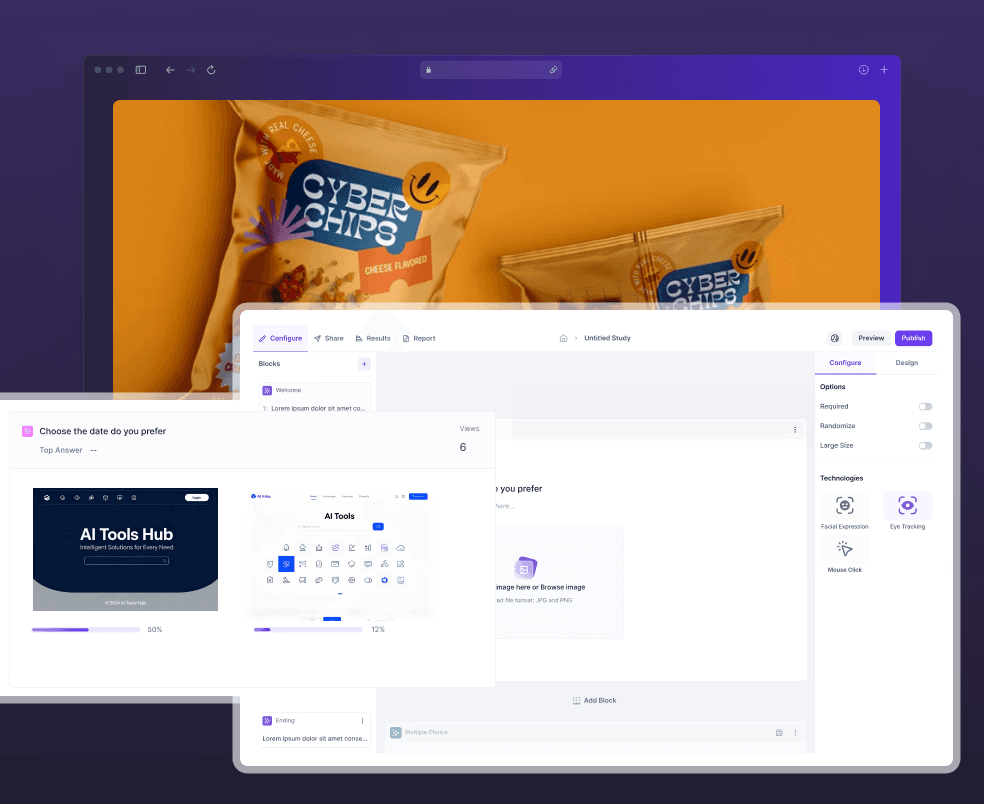
Concepts can be tested in many forms, including copy, visuals, storyboards, early designs, or experience flows.
As participants engage with these concepts, Entropik captures:
Emotional responses that signal interest, hesitation, or rejection
Attention heatmaps that show visual priority and blind spots
Behavioral patterns that indicate ease, overload, or confusion
These insights help teams understand not just which concept performs better, but why it does.
Learn more about Entropik’s approach to concept testing here:
https://www.entropik.io/solutions/use-cases/concept-testing
What This Enables for Teams
With emotion and attention data layered into concept testing, teams can:
Validate ideas earlier with greater confidence
Identify emotional disconnects before execution
Optimize concepts instead of discarding them
Align stakeholders around evidence, not opinions
Decisions become faster, clearer, and easier to defend.
From Concept Approval to Concept Confidence
Concept testing should not be a checkbox. It should be a safeguard.
By evolving beyond surveys and surface level scores, teams can:
Reduce late stage rework
Protect product, engineering, and media investments
Build ideas that resonate in real world conditions
The strongest concepts are not just liked. They are noticed, understood, and felt immediately.
Smarter concept testing turns early ideas into confident decisions and sets everything that follows up for success.
Frequently asked questions
1. What is concept testing?
Concept testing evaluates a new product, service, or marketing idea with target consumers before full development or launch, gauging appeal and potential success.
2. What methods are used in concept testing?
Common methods include surveys, focus groups, in-depth interviews, and increasingly, AI-moderated interviews or behavioral testing techniques.
3. Why is concept testing important before a full product launch?
It helps validate demand and identify potential issues early, reducing the risk of investing heavily in a product or campaign that doesn't resonate with the target audience.
4. What metrics are commonly measured in concept testing?
Common metrics include purchase intent, uniqueness, relevance, and overall appeal ratings compared across different concept variations.
5. How early in product development should concept testing happen?
Concept testing should happen as early as possible, ideally before significant investment in development, to validate direction while changes remain low-cost.
Related Topic: