Emotion AI testing for TV and display ads uses technologies like facial coding and eye tracking to measure viewers' second-by-second emotional and attention responses to a commercial, revealing exactly which moments engage or lose an audience. This behavioral data fills a gap traditional stated-response ad testing misses, since viewers often can't consciously articulate what moment made an ad memorable or forgettable.

TV and display advertising still command massive budgets. Yet many campaigns underperform not because of poor media buying, but because the creative fails to connect in the moments that matter most.
Viewers do not pause to analyze ads. They react instantly. If an ad does not capture attention, trigger the right emotion, and communicate clearly within seconds, it is ignored. By the time performance data shows the problem, the budget is already spent.
This is why TV and display ads testing with Emotion AI has become essential for modern marketing teams.
The Real Problem with TV and Display Advertising Today
1. Ads Are Decided by Opinions, Not Behavior
Creative decisions are often driven by internal reviews, agency intuition, or executive preferences. These inputs are subjective and rarely reflect how real audiences actually respond.
2. Traditional Testing Is Too Slow
Panel based testing and survey driven feedback take days or weeks. In fast moving media environments, this delay reduces iteration cycles and increases the risk of launching weak creatives.
3. Surveys Miss Emotional Reality
Viewers struggle to articulate how an ad made them feel. Subtle emotional responses like confusion, boredom, or cognitive overload often go unreported.
4. Metrics Explain What Happened, Not Why
Impressions, reach, and CTR reveal outcomes, but they do not explain the emotional and visual drivers behind performance.
The result is a persistent gap between creative intent and actual audience response.
Why This Problem Needs to Be Fixed Now
TV and display ads operate in an attention constrained environment.
Viewers multitask during TV ads
Display ads compete with content, not other ads
Brand decisions are made in the first few seconds
If an ad fails early, nothing later matters.
Fixing this requires understanding:
What viewers notice first
What they ignore
How emotions shift moment by moment
Whether the message is understood instantly
These insights cannot be captured through traditional testing or post launch analytics alone.
The Fix: TV and Display Ads Testing with Emotion AI
Emotion AI introduces a behavioral layer to ad testing. Instead of asking viewers what they think, it measures how they actually react.
By combining emotion measurement, attention tracking, and predictive modeling, teams can evaluate TV and display ads before launch, not after performance declines.
What Is TV and Display Ads Testing with Emotion AI?
Emotion AI powered ad testing analyzes real viewer reactions as they experience an ad.
It captures:
Facial expressions that signal interest, confusion, or disengagement
Attention patterns that reveal what elements attract or lose focus
Emotional shifts across each second of the ad
This provides a clear, objective view of how an ad performs at a human level.
How TV Ads Testing Works
TV ads rely heavily on storytelling, pacing, and emotional buildup. A weak opening or unclear message can derail engagement entirely.
With Emotion AI driven TV ad testing, teams can:
Measure attention in the opening seconds
Track emotional engagement scene by scene
Identify moments of drop off or confusion
Validate branding visibility without disrupting narrative flow
This enables marketers to answer key questions:
Does the story hook viewers fast enough?
Are emotions building or flattening over time?
Is branding noticed and remembered?
Edits can then be optimized before broadcast, protecting high media investments.
How Display Ads Testing Works
Display ads must win attention instantly in cluttered environments.
Emotion AI based display ad testing helps teams:
Visualize attention heatmaps across layouts
Optimize headline, imagery, and CTA hierarchy
Measure emotional response to visuals and messaging
Compare multiple creative variants simultaneously
This ensures display ads are not just visible, but emotionally engaging and clear enough to drive action.
Where Traditional Ad Testing Falls Short
Traditional ad testing focuses on recall and stated preference. It often misses:
Subconscious reactions
Micro hesitation moments
Visual overload and distraction
Emotional fatigue
Emotion AI fills this gap by capturing reactions viewers cannot consciously articulate.
How Entropik Helps Improve TV and Display Ad Performance
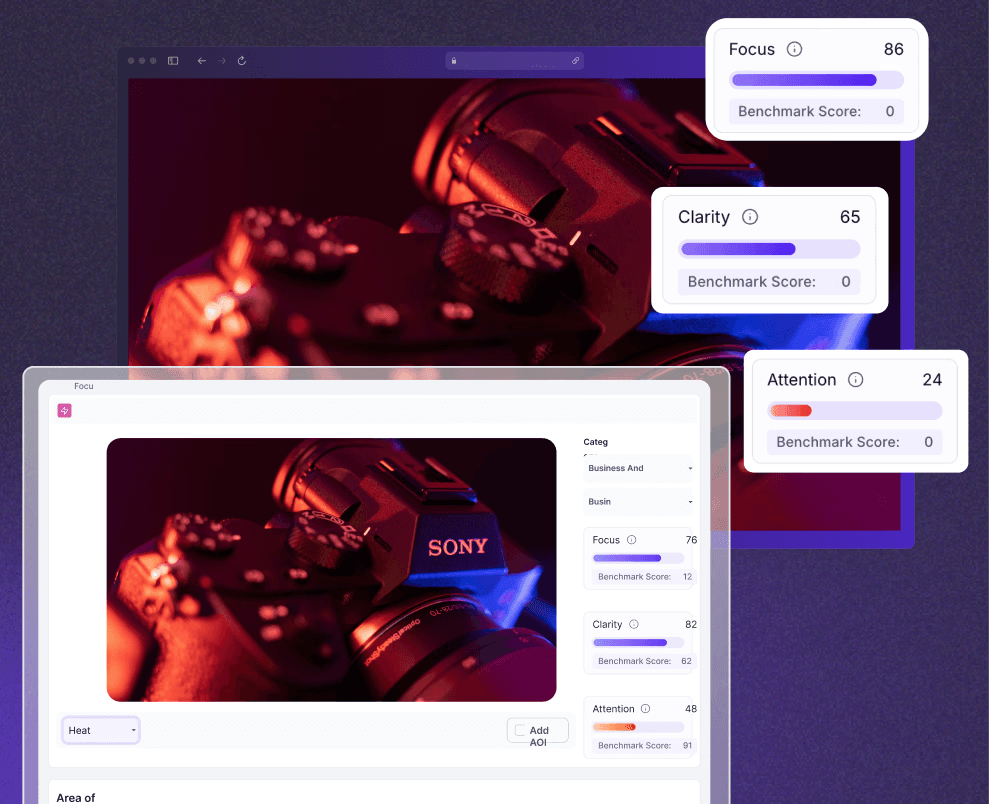
Entropik enables TV and display ads testing using Emotion AI, attention analytics, and predictive insights in a single platform.
Pre Launch Creative Validation
Test TV and display ads before spending on media. Identify strong edits early and eliminate weak creatives.
Second by Second Emotional Readouts
Understand exactly when viewers feel engaged, confused, or disengaged throughout the ad timeline.
Attention and Visual Hierarchy Analysis
See what captures attention, what gets ignored, and how visual structure impacts clarity across screens.
Faster Testing at Scale
Test multiple creatives at once without panels or hardware, reducing cost and time to insight.
Predictive Performance Insights
Forecast recall, engagement, and conversion likelihood using behavioral signals.
Why Emotion AI Works Better for Advertising
Emotion drives memory and action. Ads that fail emotionally fail commercially.
Emotion AI helps brands:
Reduce creative risk
Improve message clarity
Increase recall and engagement
Align teams around data, not opinions
Testing becomes preventative instead of reactive.
Business Impact of Emotion AI Based Ad Testing
Brands using Emotion AI for TV and display ads testing consistently see:
Higher attention retention in the first few seconds
Stronger emotional resonance with target audiences
Improved recall and brand linkage
Reduced media waste from underperforming creatives
Creative optimization happens before money is spent.
From Guesswork to Confidence in Advertising Decisions
TV and display advertising will always be high stakes. The difference between success and waste lies in understanding how viewers truly experience your creative.
Emotion AI transforms ad testing by revealing:
What viewers feel
What they notice
What drives them to act
By fixing creative issues before launch, marketing teams protect budgets, accelerate learning, and build ads that genuinely connect.
TV and display ads testing with Emotion AI is no longer optional. It is the new standard for brands that want every impression to count.
https://www.entropik.io/solutions/use-cases/tv-or-display-ads-testing
Frequently asked questions
1. What does traditional ad testing often miss?
Traditional ad testing relying solely on self-reported surveys can miss subconscious emotional reactions and moment-by-moment engagement that viewers may not accurately recall or report.
2. How does Emotion AI improve TV and display ad testing?
Emotion AI captures real-time facial and behavioral responses throughout an ad, revealing exactly which moments generate positive or negative emotional reactions.
3. What can Emotion AI reveal that surveys alone can't?
It can pinpoint specific seconds within an ad where engagement rises or drops, offering granular insight surveys can't provide about the overall viewing experience.
4. Is Emotion AI testing effective for both TV and digital display ads?
Yes, Emotion AI can be applied to both formats, though display ads may also incorporate attention/eye-tracking data given their more static or interactive nature.
5. How can brands use Emotion AI insights to improve ad performance?
Brands can use moment-by-moment emotional data to trim or refine underperforming sections of an ad, strengthening the moments that drive the strongest positive response.
Related Topic: