
Introduction: When “Playful” AI Turns Problematic
McDonald’s Netherlands launched an AI-generated Christmas ad meant to be funny, chaotic, and relatable—but it ended up being pulled after heavy public backlash. The film tried to capture festive mishaps and position McDonald’s as a warm refuge from winter chaos, yet viewers described it as unsettling and emotionally off-key.
For brands racing to adopt generative AI, this case is a powerful reminder: without understanding real audience emotions, even the most ambitious AI campaign can damage brand perception rather than elevate it.
What Went Wrong with McDonald’s AI Christmas Ad?
The concept looked strong on paper. The ad follows a series of slapstick holiday mishaps—people slipping on ice, snow falling onto a cyclist, gifts getting smashed, chaotic family gatherings—before cutting to cozy scenes inside a McDonald’s restaurant. The recurring line “It’s the most terrible time of the year” was meant to be tongue‑in‑cheek, contrasting chaos outside with comfort inside.
The problem started when generative AI took center stage in the visuals. Many frames contained odd, uncanny details that viewers immediately noticed and shared online. Instead of feeling festive and human, the world of the ad felt synthetic, hollow, and emotionally confusing—especially for a Christmas campaign that should typically signal joy, nostalgia, and warmth.
How Entropik’s Decode Analyzed the Ad
To understand how audiences actually experienced this campaign, the ad was tested using Entropik’s Decode platform. Decode applies Emotion AI to measure second‑by‑second emotional responses, attention, and engagement while viewers watch the content.
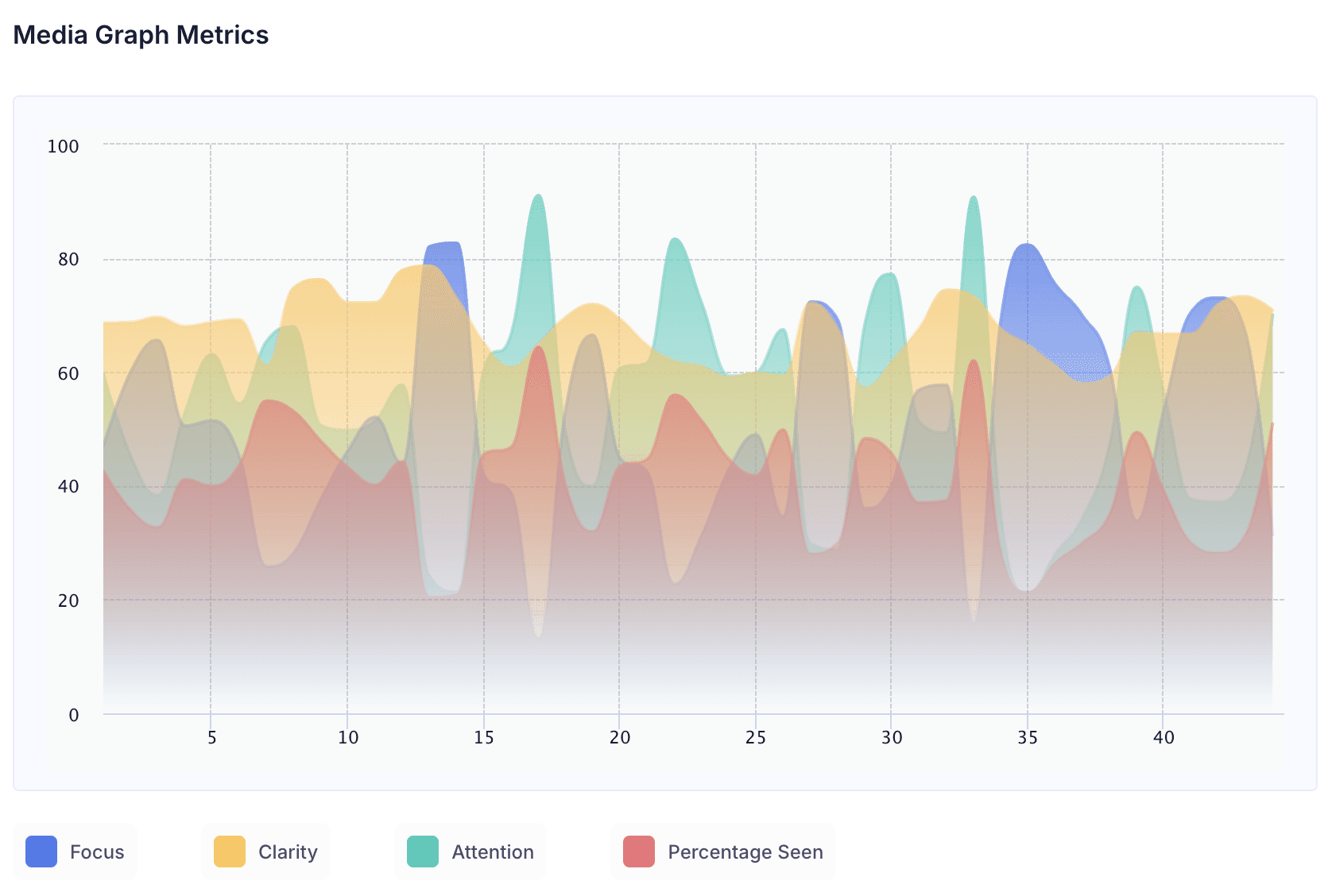
This graph helps marketers see:
Where attention spikes (e.g., moments of exaggerated mishaps or uncanny visuals).
Where focus drops, indicating confusion or disengagement.
How clarity behaves when the story switches from chaos outside to comfort inside the restaurant.
In the McDonald’s case, the graph reveals that while attention stayed relatively high, the emotional quality of that attention was not consistently positive. Viewers were watching, but not always for the reasons the brand intended.
Decode Scores: Did the Ad Land Emotionally?
Decode also aggregates key creative KPIs like Focus, Clarity, Attention, and Engagement into a single dashboard so teams can quickly understand performance.
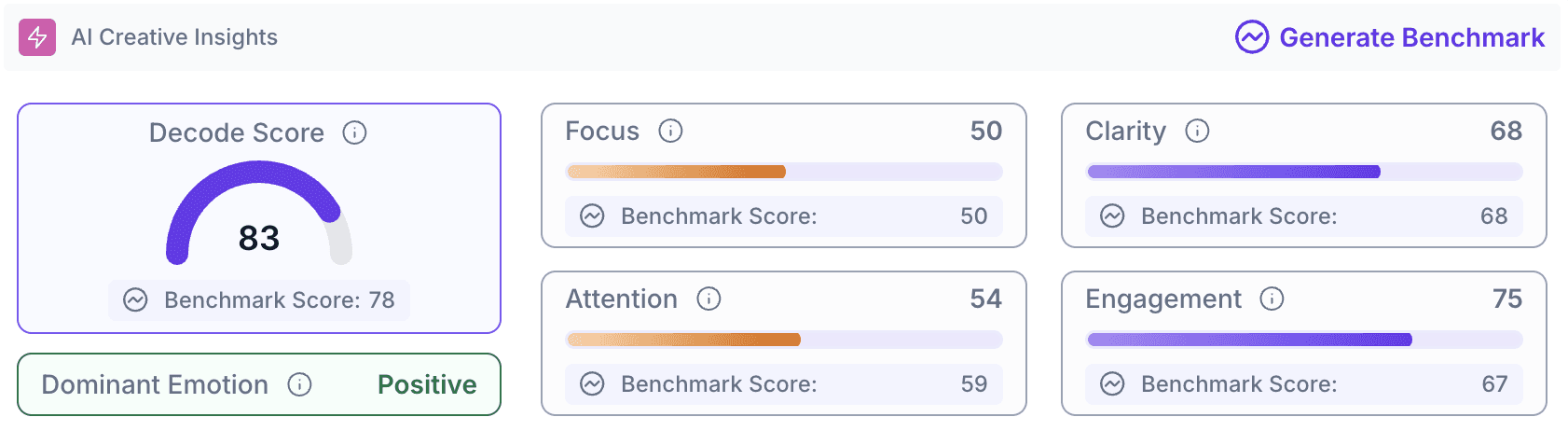
From this panel, marketers can interpret:
Overall Decode Score – a high‑level indicator of how strongly the ad connects with viewers.
Focus and Attention – whether viewers are visually and cognitively tuned in to the story.
Clarity – whether the narrative and message are understood.
Engagement – whether people are emotionally and mentally involved with what they’re seeing.
In the case of the McDonald’s AI ad, Decode showed healthy engagement and focus, but clarity and emotional alignment did not match typical festive benchmarks. The content was interesting, but not consistently comforting or heart‑warming—the core emotional promise of a Christmas spot.
Emotional Insights: The Gap Between Intent and Reality
Beyond attention metrics, Emotion AI breaks down what people actually feel moment‑to‑moment. For the McDonald’s ad, Decode’s Emotional Insights surfaced a mix of positive and problematic reactions.
Key patterns from the emotional breakdown:
Strong positive emotions – High levels of happy and positive emotions indicate that parts of the narrative still delivered amusement and warmth as planned.
High surprise – A strong surprise score reflected exaggerated chaos and AI‑generated oddities that were visually striking but sometimes jarring.
Meaningful negative emotions – Notable levels of negative, fear, anger, and sadness signaled that a sizable portion of viewers experienced discomfort rather than light‑hearted fun.
This emotional mix points to the central issue: the brand wanted “playful chaos,” but the execution slid into “uncanny chaos.” Emotion AI made that disconnect visible in the data.
Why the Ad Backfired: Four Core Issues
From both the creative analysis and Decode’s emotional data, four key reasons emerge for why the AI‑driven ad failed to land the way McDonald’s intended:
Loss of human judgment
Generative AI produced technically impressive visuals but overlooked human nuances—facial warmth, natural motion, and subtle emotional cues that make holiday storytelling feel genuine.Uncanny execution
AI artifacts pulled scenes into the uncanny valley. Viewers noticed strange details and textures, which triggered surprise and discomfort rather than festive delight.Seasonal expectation mismatch
During Christmas, audiences are primed for themes of comfort, family, and nostalgia. When the emotional tone feels bleak, cold, or “off,” viewers instinctively reject it, no matter how clever the idea.Visibility without positive sentiment
The campaign generated conversation, but much of it was critical. As experts have pointed out, awareness without positive sentiment can become a liability, not an asset.
The takeaway: AI didn’t fail because it is “bad.” It failed because it wasn’t paired with robust emotional validation.
How Emotion AI De‑Risks Generative AI for Brands
Generative AI is here to stay. It makes it easier to concept, iterate, and produce content at speed and scale. But volume without emotional alignment simply scales the risk. Emotion AI provides the missing safety layer.
With platforms like Decode, brands can:
Test AI‑generated creative before launch
Quickly run emotion tests on storyboards, rough cuts, and final films to see where attention spikes, where clarity drops, and how emotions flow across the narrative.Quantify emotional impact, not just views
Move beyond vanity metrics and understand how many viewers feel happy, surprised, fearful, or neutral at each second of the ad.Benchmark against high‑performing creative
Compare Decode Scores, engagement, and emotional signatures against successful category or brand campaigns to understand whether the new AI concept is truly on‑par.Iterate creatives with data‑backed direction
Use insights from the emotion graph and Decode dashboard to refine scenes, fix confusing visuals, and adjust tone before media investment.
Emotion AI does not replace creative teams or AI tools—it ensures they are working in service of the same emotional outcome.
A Practical Framework for AI‑Safe Creative
Inspired by industry recommendations and the McDonald’s case, marketers can adopt this simple framework to keep AI experiments emotionally on‑brand:
Human review first
Require experienced creatives and strategists to assess all AI outputs for emotional tone, cultural sensitivity, and brand fit before any external testing.Audience testing with Emotion AI
Use platforms like Decode to capture real emotional responses, attention, and engagement from real viewers. Let the emotion graph and scores decide whether a concept is ready.Blend AI efficiency with human storytelling
Use generative AI for speed and exploration, but anchor every campaign in human insight, empathy, and narrative craftsmanship.Monitor real‑time sentiment post‑launch
Once live, track social sentiment and performance signals closely. If emotional feedback turns negative, be ready to optimize creative or pull it back quickly.
Conclusion: Pair Generative AI with Emotion AI or Risk the Backlash
The McDonald’s AI Christmas ad will be remembered as a cautionary tale for brands experimenting with AI-first creative. The idea was not inherently flawed—but without emotional validation, execution drifted into territory audiences found uncomfortable and inauthentic.
Generative AI can make production faster. Emotion AI makes outcomes safer and more effective. Together, they allow brands to innovate boldly while staying emotionally aligned with what audiences actually feel.
If your team is exploring AI-generated campaigns, make sure the next big launch isn’t the next big backlash. Use tools like Entropik’s Decode—emotion graphs, Decode Scores, and granular emotional insights—to validate creative before it goes live and to keep your brand on the right side of audience emotion.